

The Great Wildebeest Migration: Africa’s Most Epic Wildlife Spectacle
There is a moment that alters travelers for life.
You stand at the edge of a vast field, and the horizon moves. What begins as a distant murmur becomes thunder. Two million animals marching as one ancient current across the Serengeti. Dust boiled in golden billows. The air is almost alive. And in that instant you realize why people spend their lives chasing the wild. Why they save. 4. Why do they come back?
This is the Great Wildebeest Migration. The greatest terrestrial animal migration on Earth. This is a bucket list moment, not just ‘viewing nature.’ It’s seeing one of nature’s most primitive, visceral dramas happen in real time, a reminder that you are standing in the midst of something absolutely timeless and desperately threatened.
If you have ever dreamt about Africa, here is the experience to transport you back.
What Is the Great Wildebeest Migration?
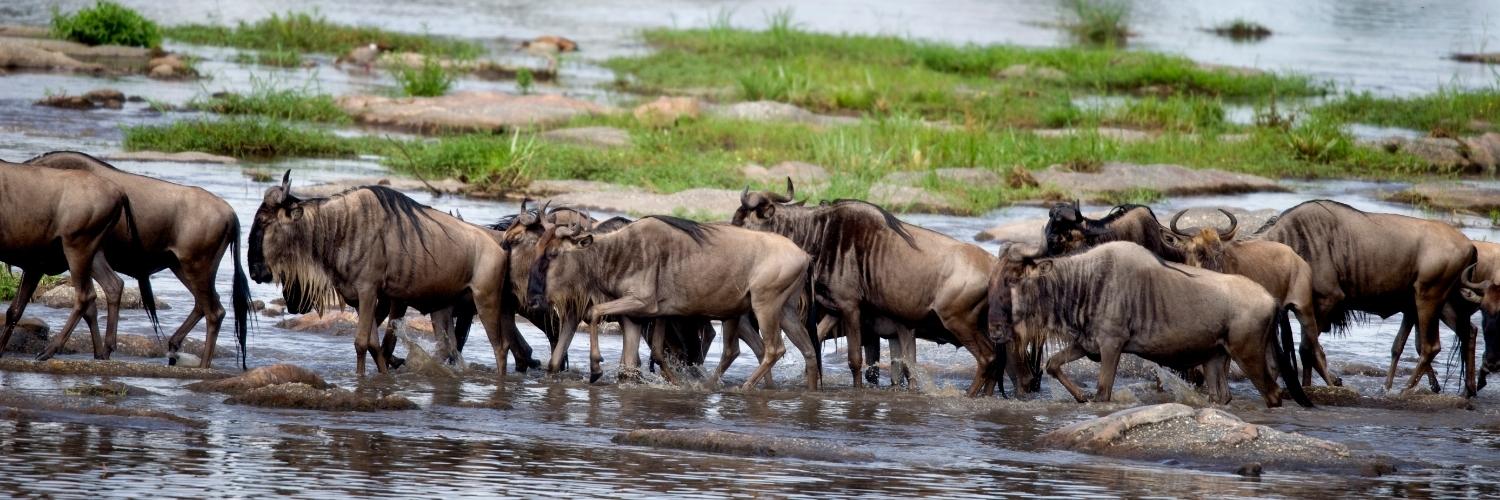
Every year two million wildebeest, zebras and gazelles move through the Serengeti and Masai Mara environment in a clockwise cycle following the rain, the grass and survival. It’s not one big movement, it’s a never ending trip, a cycle of seasons that goes through the calendar with each season bringing a fresh set of experiences, perils and moments of raw, unadulterated nature.
Migration is not a planned excursion. It’s a biological impulse, written into the DNA of numerous species over millenia. They follow the rains, follow the fresh grass. They travel rivers that have crocodiles as big as cars. They guard calves from predators. Predators hunt . Babies are born Animals shed the weak. It is natural. It is raw. It is utterly mesmerizing.
The setting: the Serengeti. In the Maasai language the term means “the location where the land goes on forever”. A 15,000 square km expanse of golden grassland, acacia-dotted plains and granite kopjes is one of the most magnificent wildlife theatres on Earth. And for those who time their journey just right, it’s the easiest front-row seat to unvarnished animal drama.
The Wildebeest Migration Calendar: When to Witness the Magic
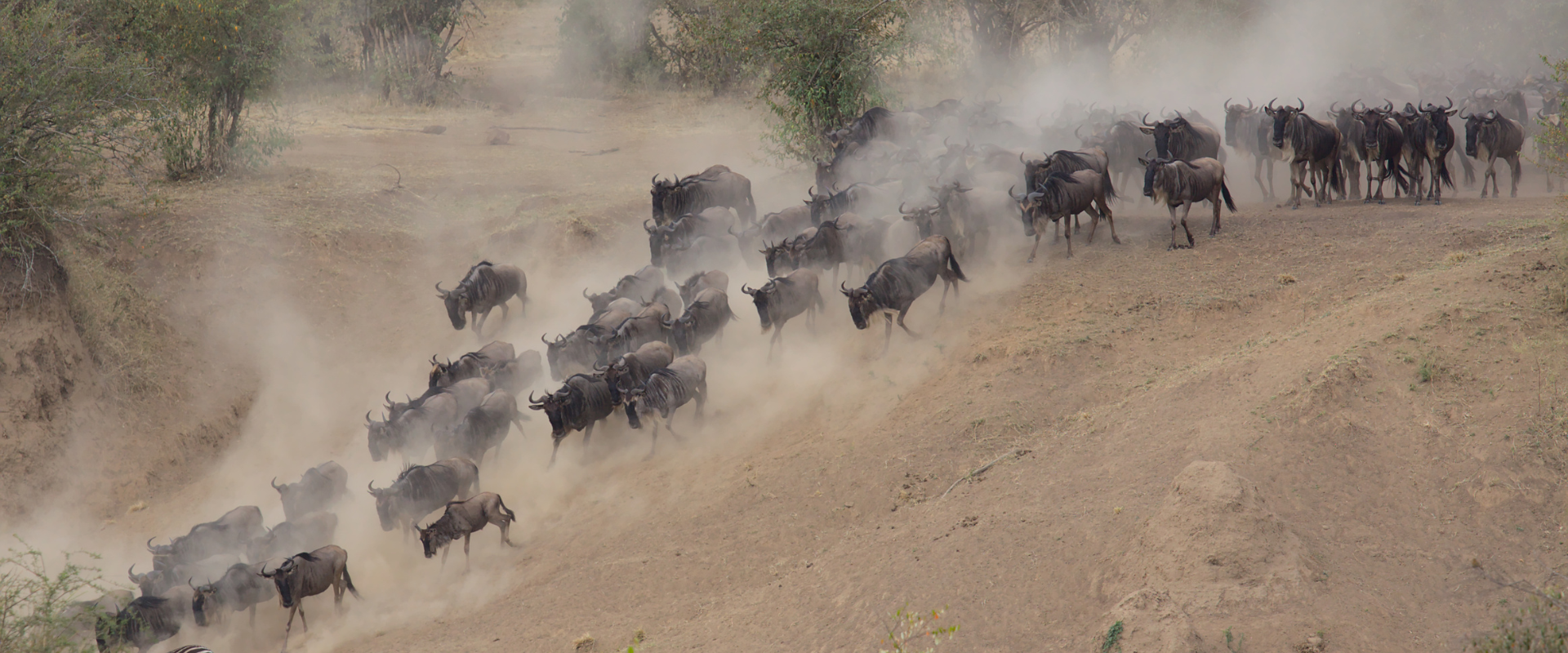
Timing is everything. The wildebeest migration flows in predictable patterns, and knowing where the herds are headed helps you position yourself for the most extraordinary experiences.
December–March: The Southern Plains & Calving Season
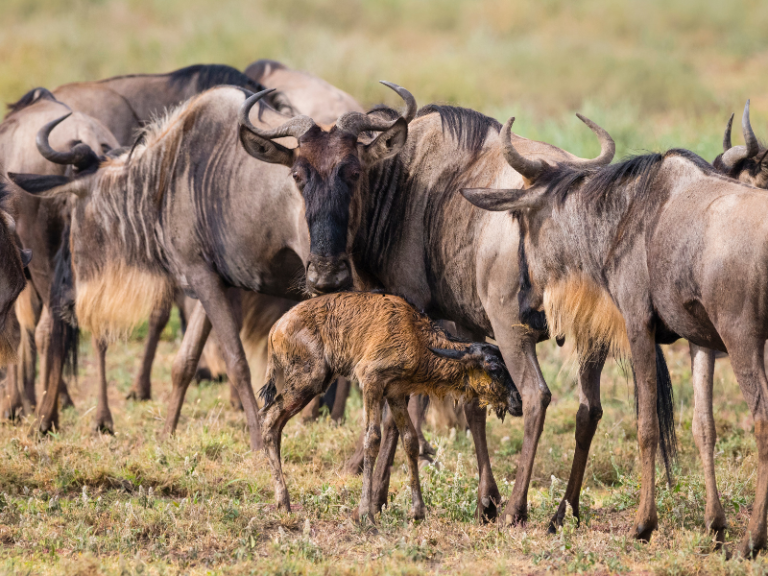
The year begins on the southern Serengeti plains. After the short rains (November–December), the grasslands explode with green, drawing the herds to nutrient-rich grazing. This is the season of new life—nearly half a million calves are born within a six-week window. The plains teem with activity: newborns taking their first steps, predators hunting with young to feed, and hyenas and wild dogs competing for kills.
What you’ll experience: dramatic predator-prey interactions, newborns in the grass, massive herds darkening the plains, and intimate encounters with big cats on the hunt. The light is spectacular—soft mornings and golden afternoons casting long shadows across endless grassland.
Best for: Wildlife photographers, first-time safari goers, and travelers who want dense wildlife viewing without extreme water crossings.
April–May: The Western Corridor & Green Season
As the southern plains dry out, the herds push west toward the Grumeti River and beyond. May brings the long rains—thunderstorms roll in daily, the landscape transforms into emerald, and wildlife viewing becomes more spread out but more intimate. The Grumeti River crossing can happen, though it’s less predictable than the July crossing.
What you’ll experience: Lush, verdant landscapes, scattered herds in green vegetation, intense river crossings if the herds arrive, and lower tourist density (meaning more solitude and authentic camp experiences).
Best for: Adventurers seeking dramatic weather, Wildlife photographers wanting green backdrops, and travelers who prefer quieter camps to crowded viewpoints.
June–July: The Northern Crossing
By mid-year, the herds have moved north into the Moru and Ikorongo districts of the Serengeti and further north into Kenya’s Masai Mara. July is the climax – the Mara River crossing. The river crossings attract hundreds of thousands of wildebeest and zebra, who have to struggle with gigantic Nile crocodiles and large predators. This is the most extreme theater of survival.
Nature is not scripted, the crossings are not assured, although the odds are better in peak July and August. It is violent and awful and unforgettable when it happens. They take the calves away from their mothers. Animals go downstream in the wash. Crocodiles came out with a primitive strength. It is the most iconic moment of the migration.
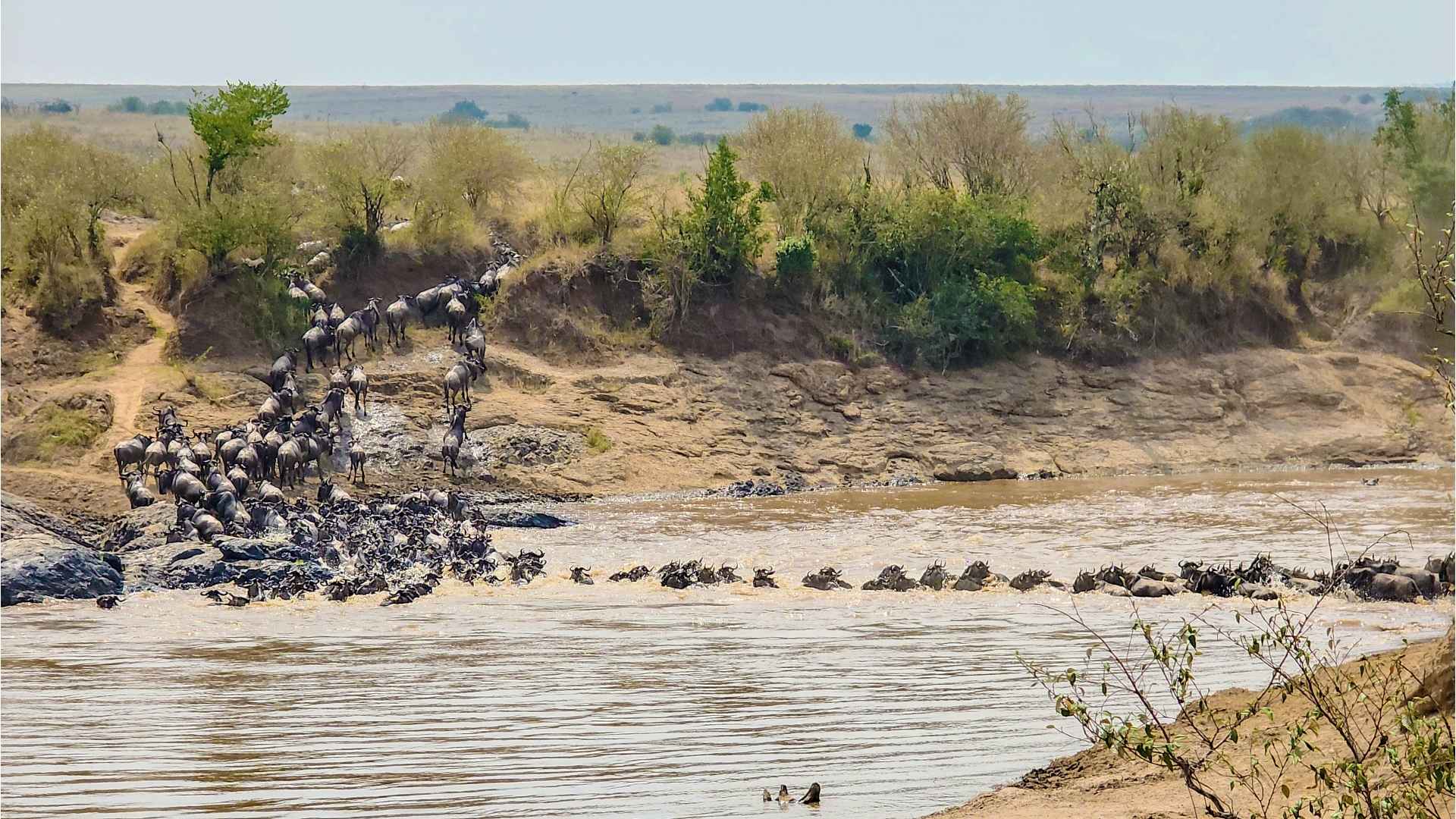
What you’ll experience: River crossings (if timing aligns), massive herds in tight concentrations, big cats hunting, tension and drama on an epic scale.
Best for: Adventure seekers, experienced safari travelers, Wildlife photographers chasing once-in-a-lifetime shots, and travelers with flexible schedules who can wait for nature’s timing.
August–November: The Return South & Predator Season
As drought grips the northern plains, the herds drift back south. By October and November, they’re returning to the southern Serengeti as the short rains arrive. This is prime predator season—lions, leopards, and wild dogs are fat and confident, and hunting is frequent.
What you’ll experience: High predator activity, smaller but concentrated herds, dramatic kills, and the renewal cycle beginning again as rains green up the southern plains.
Best for: Big cat enthusiasts, Wildlife photographers wanting action, and travelers fascinated by predator behavior.
The Sensory Reality: What You’ll Actually Feel
By mid-year the herds have gone north into the Moru and Ikorongo areas of the Serengeti and further north into Kenya’s Masai Mara. July is the grand finale – the Mara River crossing. Hundreds of thousands of wildebeest and zebra are drawn to the river crossings, where they must contend with giant Nile crocodiles and big predators. This is survival theater of the most extreme kind.
The crossings aren’t certain, nature doesn’t follow a script, but the possibility is higher during peak July and August. When it occurs it is violent, devastating and unforgettable. The calves are removed from their moms. Animals are washed down stream. Crocodiles burst forth with a primal might. It’s the most iconic moment of the migration.
The Wildlife Photography Opportunity
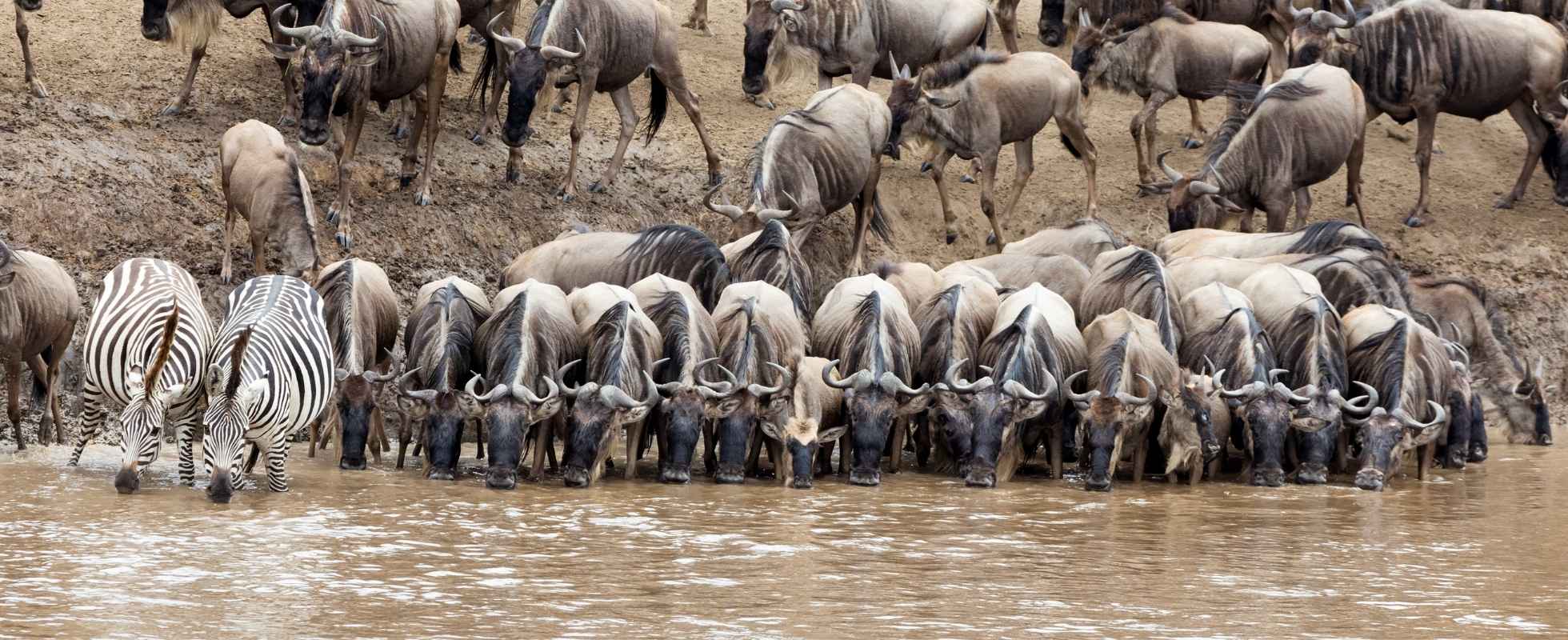
If you’re even a casual photographer, the Serengeti migration will set your mind afire.
The light is amazing. There is something about the clarity and warmth of East African light that makes golden hour shimmer like liquid. The compositions are endless: herds stretching to the horizon, dust clouds catching backlight, predators in pursuit, moms and calves in intimate moments, big skies framing minor dramas.
The challenges are significant (heat, dust, fast-moving creatures, harsh midday light) but for amateurs with great cameras and semi-professional Wildlife photographers, the migration is a lesson in wildlife and landscape photography.
Pro tips:
- The most dramatic river crossings, the most ‘iconic’ pictures, are to be seen between July-August.
- December–February new born moments and close predator encounters
- Bring in range Wide lenses capture scale; long lenses separate creatures and behavior
- The Serengeti’s golden hour is sacred—time your game drives between sunrise and dusk.
- Dust is your friend Backlighting produces beautiful ambient photos
Beyond the Herds: The Complete Serengeti wildebeest Migration Experience
The Serengeti is an entire ecosystem, yet the wildebeest migration is the headline.
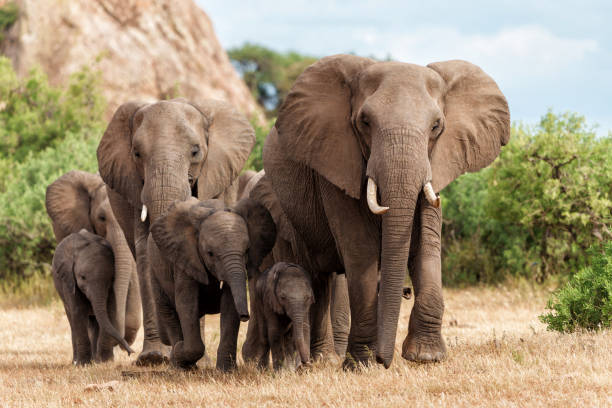
The non-migratory fauna is present all year round – elephants, giraffes, buffalo, baboons, over 500 kinds of birds and the predators that prey upon them. You’ll see lion pride with cubs, leopards draped across acacia trees, cheetahs pursuing prey across vast grassland and African wild dogs sprinting in synchronized hunts. There are layers to every game drive. A martial eagle swooping for prey. A family of warthogs retreating into their burrows. A giraffe rising impossibly high into an acacia canopy.
The scenery itself is dramatic: rocky outcroppings called kopjes where lions repose in the midday heat; riverine forests where elephants assemble to drink; and savanna stretching to the limit of the visible world. The sunrises flush the sky with amber and pink. The sunsets fired the clouds with orange and purple.
A good Serengeti experience is the wildebeest migration extravaganza combined with the more subtle calmer periods in between the spectacular displays where you just sit with the wilderness and let the wilderness change you.
Preparing for Your Serengeti Journey
When to book Serengeti safari
If you want to cross in July-August, plan 6-18 months ahead. Peak season properties do book up for dedicated vacationers. April-May off-season is great value and less crowds for a more intimate experience
Physical Considerations
Game drives are early mornings (departures before sunrise), rough roads in 4×4 vehicles, heat, hours of dust and sitting. Most travelers of all ages can handle it with adequate preparation: decent sunscreen, hydration, comfortable clothing and reasonable expectations regarding comfort. Flexibility and patience are more important than fitness.
What to Bring
- Binoculars (magnification shows detail – a must)
- Camera + additional batteries (African sun zaps electricity)
- Neutral colored clothing (earth tones, not bright colors that may frighten wildlife)
- Sunscreen + hat + sunglasses (UV is severe)
- Medications (malaria prevention if traveling during high risk months)
- Journal (you will want to write down the moments in your own words)
Health and Safety, Visa
US residents need a visa to visit Tanzania (simple to get online or on arrival). Tanzania is safe and visitor friendly. Risk of malaria – check your doctor about prophylaxis depending on travel dates and health profile. Recommended vaccines: Routine vaccines, yellow fever. Tanzania Wild Camps’ sites are located in safe, well-developed wildlife areas, with competent staff trained in visitor safety.
How to Experience the Migration: The Tanzania Wild Camps Advantage
Seeing the migration isn’t just about being in the Serengeti – it’s about how and where you see it.
Position does matter. A camp on the migration path has something irreplaceable, the ability to see animals pass your site, sometimes within sight of your luxury tent. Early dawn game drives put you ahead of the herds. Expert guides scan the scenery, read animal behavior and place you for the most remarkable moments.
Consistency is key. Hopping from property to property can mean uneven service and disconnected guidance. By staying in camps within a curated portfolio you benefit from seamless coordination, guides who know you and your preferences, and the flexibility to alter game drive strategy according to the real-time position of migration.
Community and sustainability matter. Camps genuinely committed to local partnerships and conservation attract guides with deep roots in the ecosystem. They care about the animals and the land beyond the tourist season. That passion shapes every game drive.
Comfort matters. After hours in the dust and heat, a luxury tented camp—not a generic resort—becomes a sanctuary. A private balcony overlooking the plains. A bath under the stars. Meals that combine local flavors with culinary artistry. Professional hospitality that anticipates your needs. This is how you fully absorb the experience without depleting yourself.
Tanzania Wild Camps’ Serengeti properties are positioned precisely for migration viewing, staffed by guides with lifelong connections to this ecosystem, and designed to balance an immersive wilderness experience with genuine luxury. Direct booking with them ensures the best available rates and dedicated support via phone and WhatsApp—essential when you need to adapt your itinerary based on wildlife movement.
The Moment That Stays With You
Years from now, you won’t remember the exact date or the specific coordinates. You’ll remember the feeling.
The moment you realized your small place in something vastly larger. The primal thunder of millions of hooves. The golden dust catching light. The cry of a newborn calf finding its mother. The explosive power of a predator strike. The silence afterward.
You’ll remember why humans travel. Why we save money and vacation days and courage. Why we fly across the world to stand at the edge of the wild and witness life cycling through its most ancient, honest patterns.
The Great Wildebeest Migration isn’t a destination you visit—it’s an experience that rewires you.
And once you’ve witnessed it, you understand why the Serengeti calls travelers back. Why it stays in your dreams. Why it becomes the migration of your own soul.
Are you ready to make it real? The Serengeti is calling. The herds are moving. Your moment is waiting.
Tanzania Wild Camps specializes in positioning luxury travelers for the migration spectacle. Plan your journey 6–18 months ahead, time your trip to the migration’s rhythm, and prepare for the bucket-list moment that changes everything.
Contact Tanzania Wild Camps directly for personalized itinerary planning, current herd positions, and bookings that secure your front-row seat to Africa’s greatest wildlife drama.
Quick Reference: Migration Timing Guide
Season | Months | Location | Best For | Crowds |
Calving Season | Dec–Mar | Southern Plains | Newborns, dense herds, big cats | Moderate–High |
Green Season | Apr–May | Western Corridor | Lush landscapes, river crossings | Low–Moderate |
Northern Crossing | Jun–Aug | Mara River (North) | Dramatic crossings, peak drama | High |
Return South | Sep–Nov | Northern to Central | Predator activity, smaller herds | Moderate |