

Tarangire Safari Overview
A Tarangire safari stands out for elephant density and distinctive scenery. Tarangire National Park sits on the Northern Circuit yet sees fewer vehicles than the Serengeti or Ngorongoro. As a result, game drives often feel spacious and unhurried.
The Tarangire River is the park’s lifeline. In the dry season it draws wildlife from a wide area. Tarangire elephants gather in impressive numbers. Predators follow. Birdlife thrives along the water and in the woodland.
Tanzania Wild Camps designs Northern Circuit routes that give Tarangire the time it deserves. You can explore wider trip ideas in our travel guide and learn about the team on our about us page.
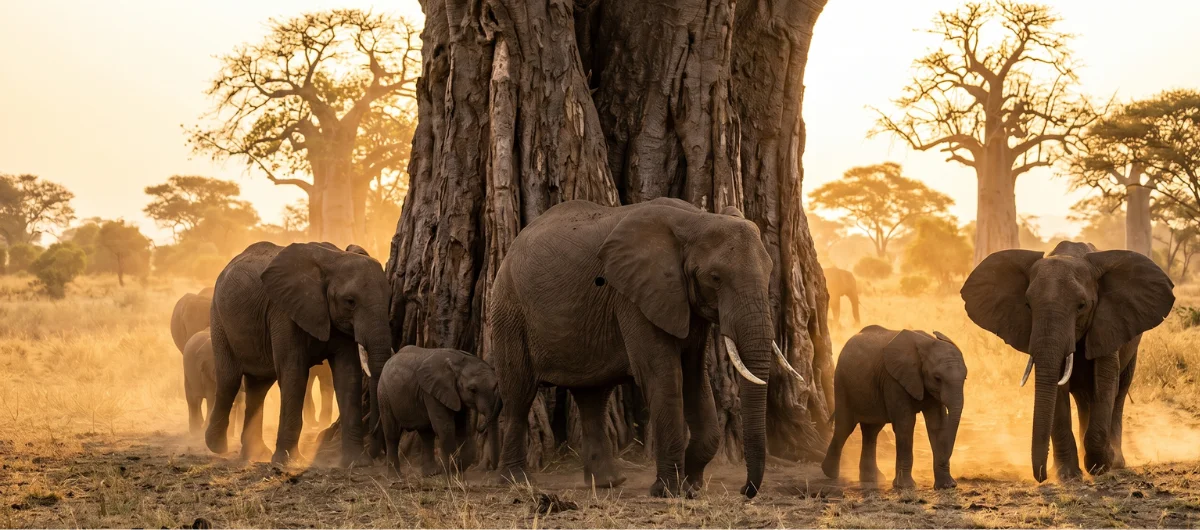
Tarangire Elephants: The Park’s Signature
Tarangire elephants are the main reason many travellers add this park. In the dry months, herds concentrate along the river and remaining water points. Groups of dozens are common. Larger gatherings occur when conditions are right.
You will see family units, calves, and mature bulls. The animals are generally accustomed to vehicles in the main viewing zones, so observation can be calm and prolonged. Photographers find strong opportunities in soft morning and late-afternoon light.
Everyone in the vehicle can enjoy these moments. Guides position the car so all guests have a clear view. Patience and quiet pay off. Rushing from sighting to sighting is rarely necessary when the herds are settled.
Elephant numbers spread out in the green season when water is more widely available. Even then, Tarangire remains one of the more reliable elephant parks on the circuit. For official park context, the Tanzania National Parks site provides background on the protected area system.
Baobabs and the Tarangire Landscape
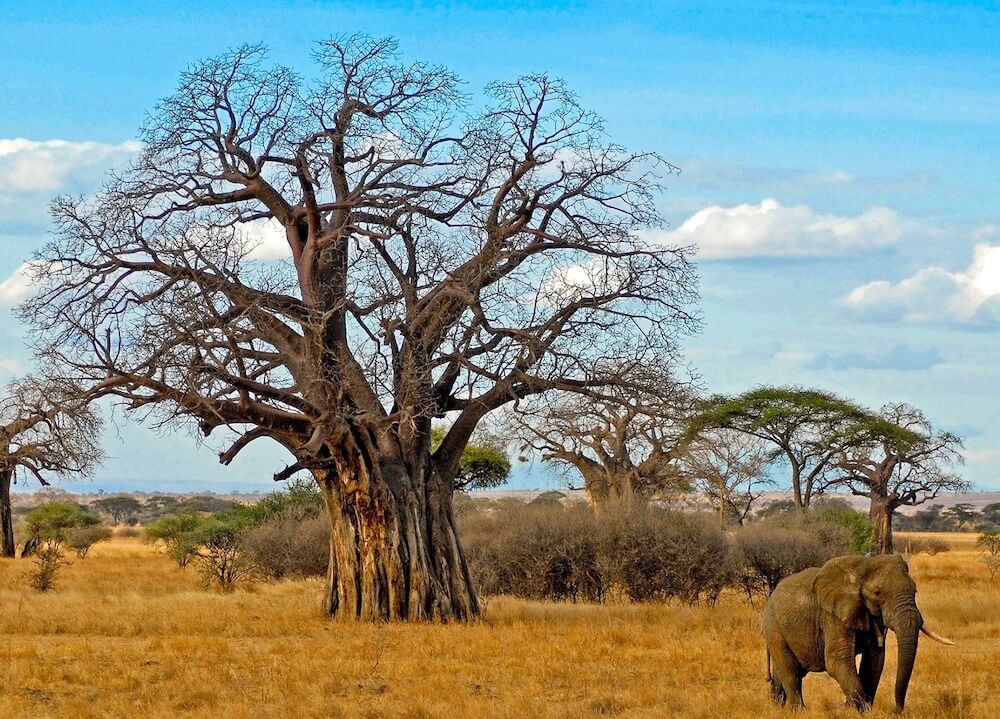
Baobab trees give Tarangire National Park its memorable silhouette. These ancient giants stand alone or in small clusters across the savannah. Their thick trunks and high branches create a landscape that feels both open and sculptural.
A classic Tarangire safari image often pairs an elephant or giraffe with a baobab. The combination is one of the most recognisable in East African wildlife photography. Many guests ask guides to pause simply to appreciate the trees themselves.
Baobabs also serve wildlife. Birds nest in cavities. Elephants sometimes strip bark. The trees are part of the living system, not only scenery. Including time to enjoy them slows the pace in a positive way.
River Corridor Wildlife
Beyond elephants, the river corridor supports buffalo, giraffe, zebra, wildebeest, and a range of antelope. Lions are present and often seen near water in the dry season. Leopards use the woodier sections. Cheetahs appear on more open ground.
Birdlife is outstanding. Hundreds of species have been recorded. Colourful rollers, bee-eaters, and raptors are regular. Wet months bring additional migrants. A Tarangire safari therefore rewards both mammal enthusiasts and birders.
Pythons and other reptiles are occasionally encountered. The mix of riverine woodland, open grassland, and seasonal swamp creates varied habitats within a manageable area.
In short, the park offers a full savannah experience without the density of vehicles found in more famous reserves. That balance is a large part of its appeal.
Best Time for a Tarangire Safari
The dry season from June to October is peak time for Tarangire elephants and general game viewing. Water sources shrink. Animals concentrate. Grass is shorter and visibility is good.
Early and late dry months both work well. October can be hot, yet wildlife remains strong. The green season brings lush scenery and fewer vehicles. Some animals disperse, so densities feel lower, but birding is often excellent and the light can be dramatic after rain.
Most Northern Circuit travellers visit in the dry season as part of a wider route. That timing maximises the elephant experience. Flexible travellers who prefer quieter conditions may still enjoy a green-season visit with adjusted expectations.
Seasonal planning advice is also covered in our travel guide.
Sample 2–3 Day Tarangire Itinerary
Two nights suit most visitors. Arrive in the afternoon for a first game drive. Spend the full next day exploring different sectors of the park. Depart the following morning toward Ngorongoro or back toward Arusha.
A three-night stay allows a slower pace and a second full day of drives. It also improves the chance of varied sightings if one period is quieter.
Many itineraries place Tarangire at the start of the Northern Circuit. It lies closest to Arusha, so the transfer is relatively short. From there the route often continues to Lake Manyara, Ngorongoro, and the Serengeti.
Everyone in the group can benefit from this structure. Families, couples, and solo travellers alike find the length practical and the wildlife rewarding.
Where to Stay Near Tarangire and the Crater Area
Accommodation options around the northern parks range from tented camps to comfortable lodges. Staying within reach of both Tarangire and Ngorongoro keeps transfers efficient.
For a stay oriented toward the Ngorongoro side, consider Ngorongoro Wild Camp. For a tranquil base near Karatu, Sunset Village Lodge offers a calm setting with easy access to the wider circuit.
Your preferred style — tented atmosphere or lodge comfort — can be matched to the route. The team at Tanzania Wild Camps helps align location, season, and budget. Reach out via contact us when you are ready to plan.

Why Include Tarangire in Your Northern Circuit
Tarangire is often described as underrated. That description is fair. It delivers large elephant herds and beautiful landscapes without the vehicle pressure of the most famous parks.
It also fits the circuit logistics well. A stop here adds variety before or after the crater and the Serengeti. The change of scene keeps the overall safari feeling fresh for every guest.
Photographers gain distinctive images from the baobabs and elephant gatherings. Travellers who simply want strong game viewing in a relaxed atmosphere find the park consistently rewarding. Inclusive guiding ensures that different interests within a group can all be met.
Official conservation context for Tanzania’s parks is available through TANAPA and related public resources.
Tarangire Safari FAQs
When is the best time to see Tarangire elephants?
The dry season from June to October offers the largest concentrations along the river and remaining water sources.
How many days do I need in Tarangire National Park?
Two nights (one full day plus arrival and departure drives) suit most visitors. Three nights allow a slower pace.
Is Tarangire good for first-time safari guests?
Yes. The elephant herds, baobabs, and relatively quiet atmosphere make it an excellent introduction or addition to the Northern Circuit for all ages and experience levels.
Can Tarangire be combined with Ngorongoro?
Easily. Many itineraries move from Tarangire toward the crater area in a logical flow. Nearby stays such as Sunset Village Lodge or Ngorongoro Wild Camp support that route.
How do I start planning?
Browse the travel guide or write to us through contact us. We will match dates, group needs, and preferred style.
Add Tarangire to Your Itinerary
Ready for Tarangire elephants, baobabs, and river wildlife? Tell us your dates and preferences. We will show clear ways to include Tarangire National Park in a balanced Northern Circuit safari for your whole group.