
Safari Tips for Photographers: How to Capture Stunning Wildlife Photos in Tanzania
A safari through Tanzania’s legendary northern wildlife circuit is widely considered the holy grail of African wildlife photography. From the boundless gold horizons of the Serengeti National Park and the ancient, enclosed ecosystem of the Ngorongoro Crater to the colossal baobab forests and elephant kingdoms of Tarangire, Tanzania offers raw, untamed nature on a scale found nowhere else on earth. Here, predator and prey engage in an age-old drama under sweeping skies that shift from soft pastel dawns to fiery crimson sunsets.
However, converting the raw magic of the East African wilderness into evocative, professional-grade photographs requires far more than simply pointing a long lens out of a safari vehicle window. You will face harsh light contrast, swirling dust storms, unpredictably moving animals, and vehicle vibration. Whether you are wielding a top-tier mirrorless setup or relying on the computational power of a modern smartphone, mastering a few essential techniques, field strategies, and mental habits will elevate your safari imagery from simple travel snapshots to captivating visual stories.
Tip 01 — Lighting & Timing
Plan Your Game Drives Around Golden Hour
In wildlife photography, light is everything. The midday sun near the equator in Tanzania creates harsh, vertical overhead shadows, washed-out tones, and squinting animals. The true magic happens during the golden hours—the first 90 minutes after sunrise and the final hour before sunset.
During these golden windows, the low angle of the sun casts warm, atmospheric hues across the savannah, bringing out rich textures in lion manes, elephant hide, and tall grasses. Furthermore, animals are far more active in the cool dawn and dusk temperatures, providing opportunities for hunting scenes, playful interactions, and dramatic backlit silhouettes.
Practice Deep Field Patience
The most common mistake first-time safari photographers make is “sighting chasing”—rushing from one animal location to another after taking a quick test shot. True wildlife photography demands immense patience. Instead of ticking boxes off a checklist, find a compelling scene or animal and stay with it.
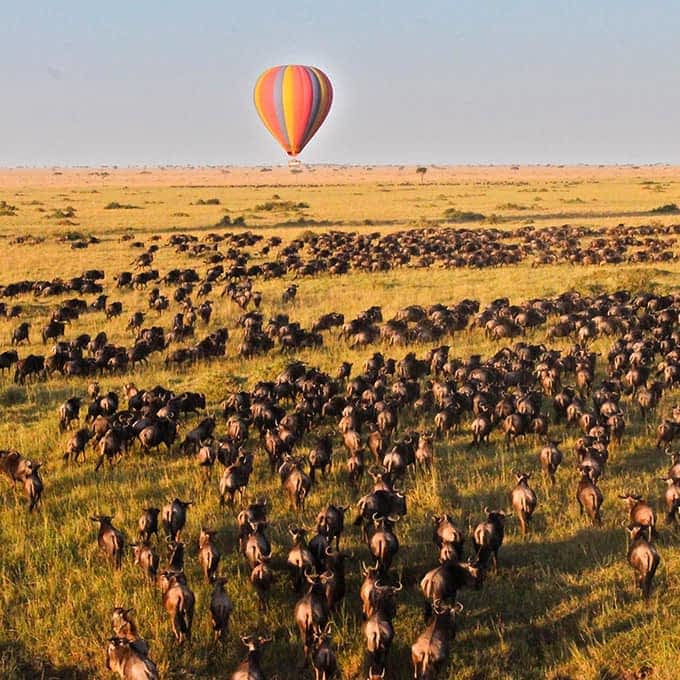
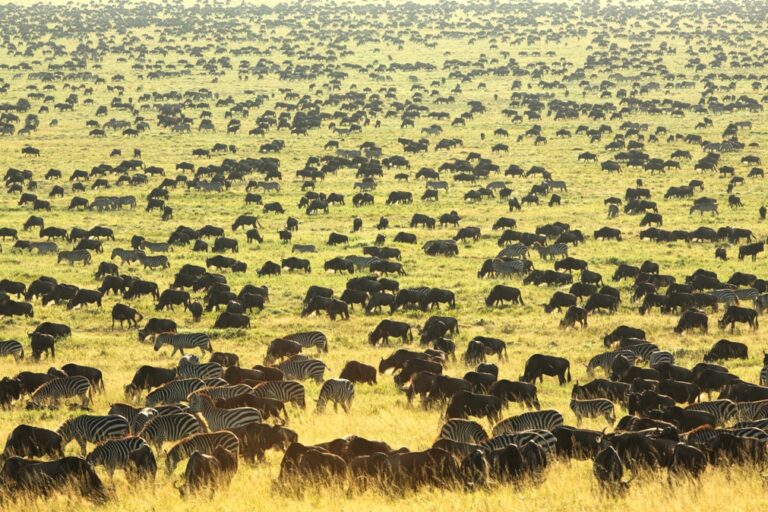
By spending 45 minutes observing a pride of lions resting in the shade or a herd of wildebeest gathered on the banks of the Mara River, you learn to read subtle micro-behaviors. You will notice the twitch of an ear before a cheetah stands up, or the warning stamp of a mother elephant before she guides her calf. Anticipating action allows you to lock focus before the spectacular moment unfolds.
Put Wildlife Welfare First
No photograph is worth distressing an animal or destroying fragile wilderness habitats. Responsible wildlife photography is the foundation of sustainable tourism in Tanzania. Always defer to your guide’s judgment and adhere strictly to National Park rules, such as remaining on designated roads in parks like Ngorongoro and Serengeti.
Avoid making sharp noises, clapping, or asking your guide to rev the engine or drive off-road to force an animal to look at your camera. Respecting wild animals’ comfort zones yields far more natural, authentic images, ensuring that Tanzania’s ecosystems remain protected for future generations.
“Anticipation is the secret weapon of the wildlife photographer. If you wait until the leopard leaps to press the shutter, you’ve already missed the frame.”
— Tanzania Wild Camps Field Guide
Lock in Your Pre-Set Camera Settings
Bush encounters happen in split seconds. A shy leopard resting in an acacia tree might drop into the tall grass the moment your vehicle stops, or a flock of crowned cranes might take flight without warning. If your camera is switched off, your lens cap is attached, or your exposure settings are configured for yesterday’s sunset, the moment will pass you by.
Establish a habit of configuring your base settings before leaving camp on morning and afternoon drives. For action, keep your camera set to Continuous Autofocus (AI Servo/Continuous AF), High-Speed Continuous Burst Mode, and an Auto-ISO configuration with a minimum shutter speed of 1/1000s. Remove your lens cap the moment you step into the safari vehicle.
Nail the Eye Focus & Shoot Low
The eyes are the emotional centerpiece of any portrait, human or animal. A tack-sharp eye instantly connects the viewer to the wild subject, creating a powerful narrative link. Modern mirrorless camera systems featuring Animal Eye-AF make tracking eye focus dramatically easier, but single-point AF works equally well if placed deliberately over the eye nearest to your lens.
Additionally, pay close attention to your shooting height. Whenever possible, shoot from a lower perspective. Resting your beanbag on the door frame or lower window of your safari vehicle—rather than shooting from the raised pop-top roof—places you closer to the subject’s eye level, creating an intimate feel and throwing the background into a soft, pleasing blur.
Capture Environmental Context
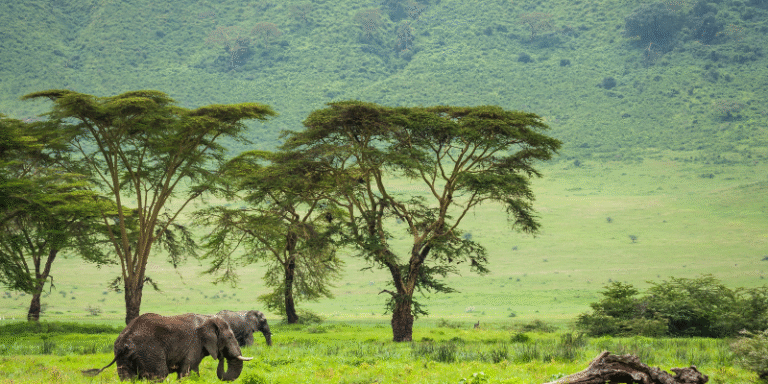
While tight, frame-filling wildlife portraits are visually striking, they often lack sense of place. A tight crop of a lion’s face could have been taken in a zoo in Europe or North America. To tell the true story of your Tanzanian safari, zoom out and embrace environmental storytelling.
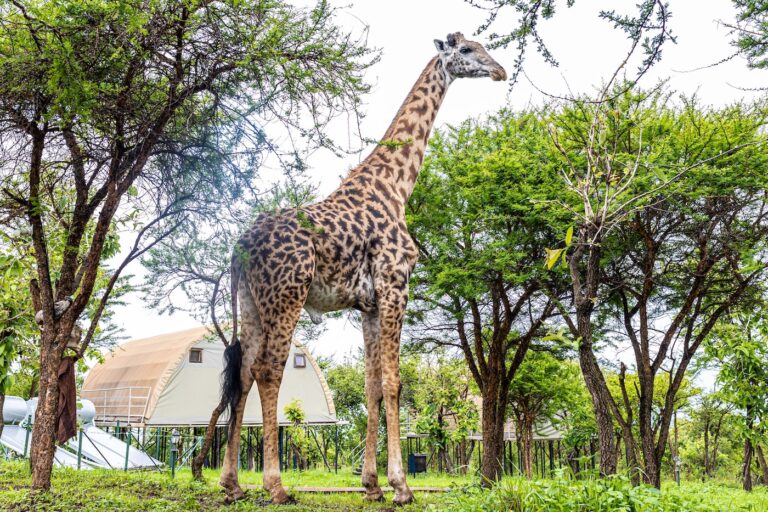
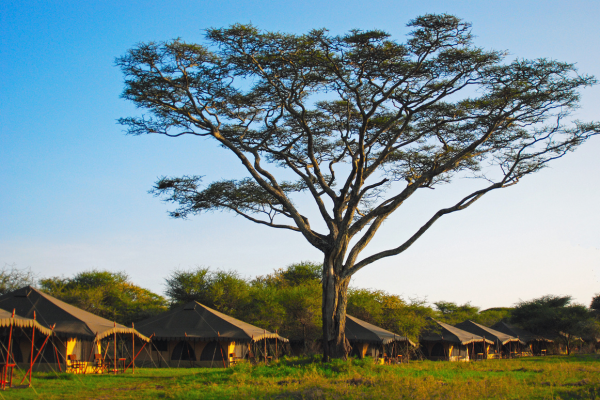
Include the grand landscapes that make Tanzania legendary: the solitary umbrella acacia tree against a storm sky, the shimmering salt crust of Lake Manyara, or the vast, endless golden plains of the Serengeti dwarfing a lone giraffe family. Frame your subject within its habitat to convey scale, atmosphere, and environmental context.
Quick Exposure Guide for Safari Conditions
Fast Predators in Action
Shutter Speed: 1/1600s – 1/3200s
Aperture: f/4 – f/5.6
ISO: Auto (up to 6400)
Stationary Portraits
Shutter Speed: 1/320s – 1/500s
Aperture: f/2.8 – f/4
ISO: 100 – 800
Large Herds & Landscapes
Shutter Speed: 1/250s – 1/1000s
Aperture: f/8 – f/11
ISO: 100 – 400
Golden Hour Silhouettes
Shutter Speed: 1/1000s
Aperture: f/5.6 – f/8
Exposure Comp: -1.0 to -2.0 EV
Pack the Essential Safari Gear Kit
Having the right tools ensures you are prepared for everything from extreme distance telephoto shots to dusty off-road trail conditions.
Camera & Lens Systems
- Primary Telephoto Lens 100–400mm or 150–600mm
- Secondary Standard Zoom 24–70mm f/2.8
- Support System Safari Beanbag (No Tripods)
- Power Storage 3x Extra OEM Batteries
- Memory Capacity High-Speed UHS-II Cards (256GB+)
Smartphone & Travel Essentials
- Physical Protection Dust-Proof Sealed Dry Bag
- Lens Maintenance Air Blower & Microfiber
- Stabilization 3-Axis Smartphone Gimbal
- Power Reserve 20,000mAh Power Bank
- Optics Adapter Binocular Phone Clip
Collaborate Actively With Your Guide
Your safari guide is far more than a driver—they are your primary photographic partner in the field. Professional guides at Tanzania Wild Camps possess years of behavioral tracking experience and can often predict an animal’s direction of travel minutes before it moves.
Communicate your photographic goals clearly at the start of your safari. Inform your guide if you prefer staying at one sighting for soft light rather than driving off to find multiple species. When approaching wildlife, ask your guide gently to position the vehicle with the sun behind your shoulders and to kill the engine to prevent chassis vibration from ruining long telephoto shots.
Shield Your Optics From Safari Dust
During Tanzania’s dry season (June to October), volcanic dust in places like the Ngorongoro Conservation Area and Central Serengeti becomes ultra-fine and airborne. This abrasive dust easily creeps into lens barrels, camera buttons, and directly onto sensor glass during lens changes inside open-top vehicles.
Minimize camera sensor dust by avoiding lens changes while out on game drives. If you bring two lenses, consider mounting them on two separate camera bodies. Wrap your gear in a light cotton cloth, pillowcase, or dry bag while driving between sightings, and use a manual rubber air-blower (never compressed air cans) to clean off surface dust every evening back at camp.
Remember to Put the Camera Down
With high-speed burst modes and endless digital storage, it is easy to become so consumed by camera settings, frame rates, and exposure histograms that you view Africa entirely through a glass viewfinder. Don’t forget why you traveled to Tanzania in the first place.
Take time on every game drive to step out from behind the camera. Lower your lens, take a deep breath, and absorb the raw sights, smells, and sounds of the African bush—the thunderous sound of wildebeest hooves, the rich scent of wild sage, and the deep, chest-rumbling roar of a lion echoing across the savannah dusk. These lived memories are the true treasures of your safari adventure.
Experience the Wild Through Your Own Lens
Every safari in Tanzania is a once-in-a-lifetime story waiting to be told. At Tanzania Wild Camps, our custom safari vehicles, experienced guides, and strategically positioned wilderness camps provide the ultimate setup for wildlife photographers of all levels.