

Why Staying in a Wilderness Camp Gives You a More Authentic Safari Experience in Tanzania
In a world where luxury lodges with infinity pools and air-conditioned suites dominate safari marketing, a growing number of travellers are seeking something different — something real. They want the Tanzania of Hemingway’s stories, of early explorers and classic black-and-white photographs: canvas tents under huge African skies, the crackle of a campfire, and the knowledge that only a thin layer of fabric separates you from the wild.
That experience still exists. It’s found in Tanzania’s true wilderness camps — small, seasonal or semi-permanent bush camps deliberately placed in remote corners of the great national parks and concessions. Here’s why choosing a wilderness camp over a permanent lodge delivers the most authentic safari Tanzania has to offer.
1. You Are Truly Inside the Wilderness — Not Looking at It

Permanent lodges, almost without exception, are built in areas where some level of human impact is tolerated year-round. They need road access, staff villages, generators, water boreholes, and waste management systems. Wilderness camps do not.
Many of the best bush camps in Tanzania are mobile or semi-mobile. They are erected only during the dry season and dismantled afterwards, leaving virtually zero trace. Others are tiny fixed camps with four to eight tents in private concessions or remote sectors of Ruaha, Katavi, Nyerere (formerly Selous), or the Serengeti’s western corridor and southern plains.
Because these camps operate under strict low-impact rules, they can be placed in locations no permanent lodge would ever be allowed — right in the heart of wildlife corridors, on the banks of seasonal rivers, or in the middle of vast plains where the great migration passes within sight of your veranda.
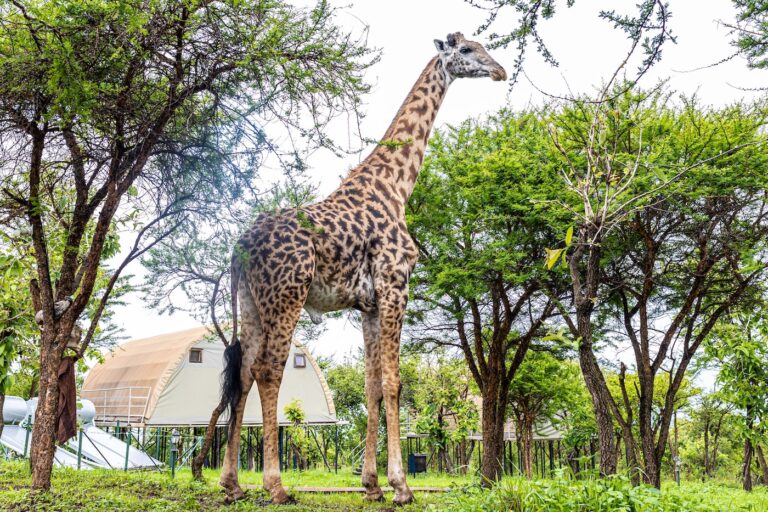
You fall asleep to hyena whoops 50 metres away. You wake to find fresh lion tracks circling the camp. That’s not staged. That’s Tanzania unfiltered.
2. Intimacy with Nature That Cannot Be Replicated
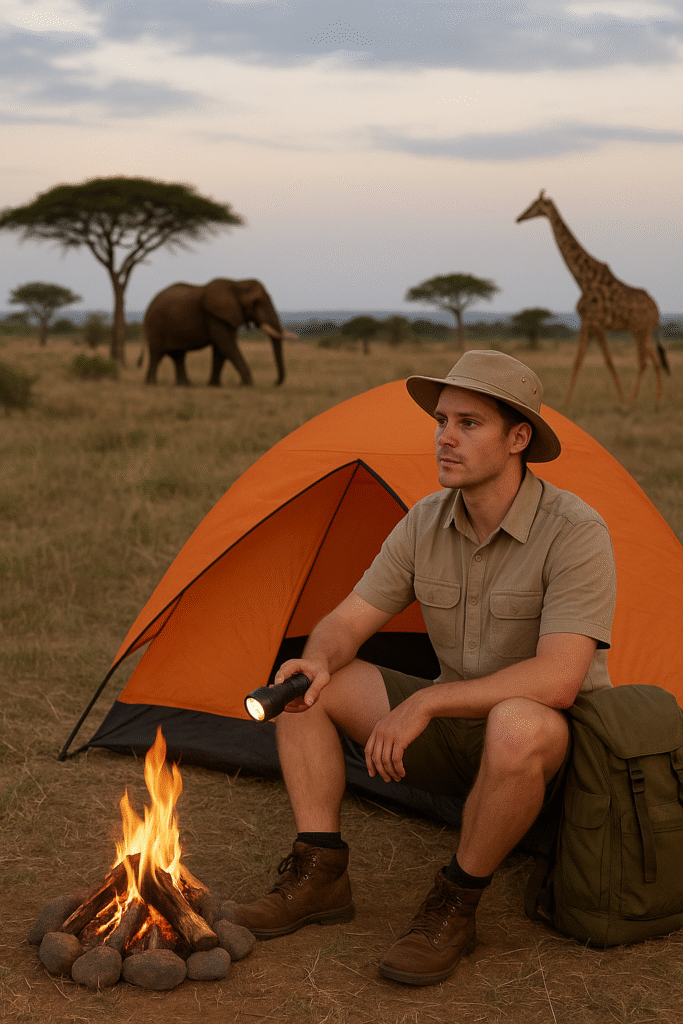
A wilderness camp rarely has more than 6–12 tents. Some have only four. Your neighbours are zebras and elephants, not other tourists.
There are no fences (except in a few specific cases for safety). Animals wander freely through camp — often at night, sometimes during dinner. Guides walk you to and from your tent after dark with a torch and a rifle, the way safaris have been done for over a century.
The lack of modern barriers creates a constant, low-level hum of awareness that you are a guest in the animals’ home — the defining feeling of an authentic safari.
3. Real Bush Skills, Real Guides
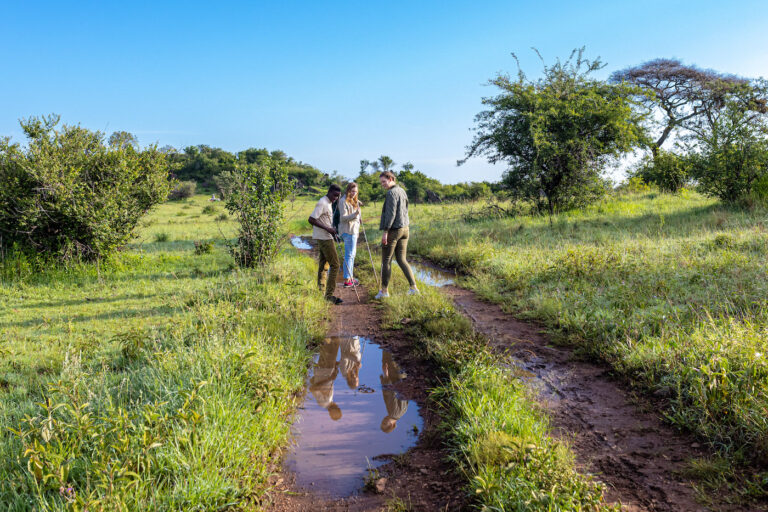
The guides who choose to work in remote wilderness camps are usually the ones who live for the bush. Many grew up in rural Tanzanian villages, tracking with their fathers long before tourism existed. They walk on game drives when tracks demand it, read the sand like a newspaper, and can find a leopard in a sausage tree at 200 metres while telling you which clan it belongs to.
Because the camps are small and remote, there is no script. Every day is different. If the migration has moved, you pack a picnic and follow. If wild dogs den nearby, you spend three days with them. Flexibility and fieldcraft replace rigid timetables.
4. Nights That Feel Like the Africa of Old
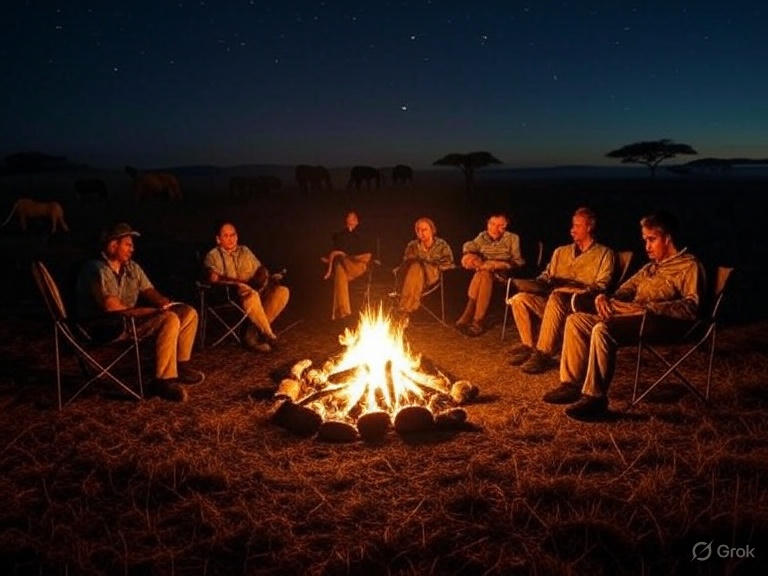
Switch off your headlamp at a wilderness camp and you are plunged into a darkness most people have never experienced. The Milky Way is a river of light. Without light pollution for a hundred kilometres, the stars feel close enough to touch.
The soundscape is equally profound: lions grunting across the plains, the maniacal laugh of hyenas, the deep whoosh of elephant breath as they drink from a waterhole you can’t see but can hear perfectly. Many camps deliberately keep generator noise to an absolute minimum — some have none at all after 10 p.m. — so the bush soundtrack is never drowned out.
- Simple, Soulful Luxury (Not Opulence for Its Own Sake)
Authenticity doesn’t mean discomfort. The best wilderness camps prove that “luxury” and “real” are not opposites.
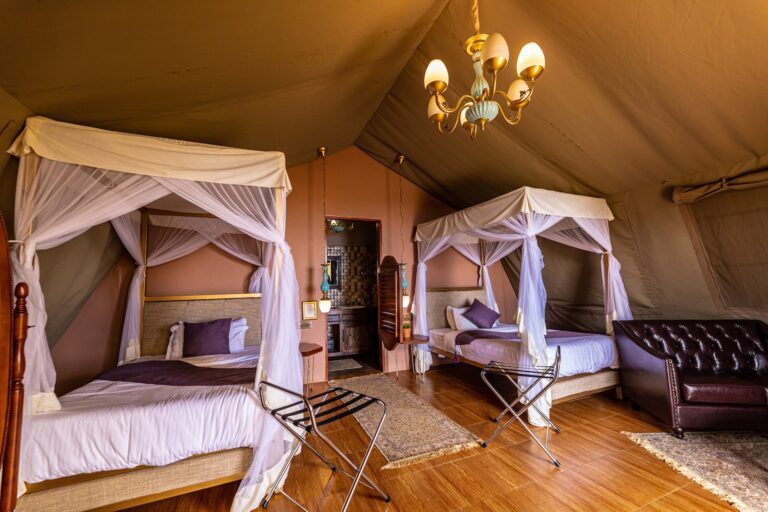
You sleep on proper beds with high-thread-count linen. You shower under the stars in canvas bucket showers filled with hot water heated on a wood fire. Meals are cooked over coals — fresh bread baked in a cast-iron pot, fillet of fresh fish from Lake Tanganyika, cold Sauvignon Blanc chilled in a canvas water sleeve.
It’s luxury earned, not luxury handed to you behind electric fences and plate-glass windows.
- Fewer People, Deeper Connections
With only a handful of guests, you actually get to know the staff and guides. By day three you’re on first-name terms with the chef who grew up herding cattle in the Maasai steppe, the spotter who can hear a leopard sawing a kilometre away, the camp manager who knows every elephant in the resident herd by the notches in their ears.
These are not interchangeable employees in matching khaki uniforms. They are individuals with stories, and in the intimate atmosphere of a bush camp, those stories are shared around the fire every night.
- The Places Permanent Lodges Can’t Reach
Some of Tanzania’s finest wildlife spectacles happen far from permanent infrastructure:
- The remote southern plains of Serengeti where the migration calves in February with virtually no other vehicles.
- Ruaha’s Mwagusi Sand River when 300 elephants a day come to drink.
- Katavi in the late dry season when hippos pack a single pool by the thousands.
- The hidden corners of Nyerere where wild dogs still hunt in huge packs.
The only accommodation in these places? Small wilderness camps.
Final Thought: Authenticity Is a Feeling, Not a Brand
An authentic safari is not about how many crystal glasses are in the bar or whether your suite has a plunge pool. It’s about feeling small under an immense sky, hearing your heart beat a little faster when something large moves in the darkness outside your tent, and knowing — really knowing — that you are inside one of the last great wildernesses on Earth.
That feeling is still alive in Tanzania’s wilderness camps. It always will be, as long as we choose to keep some places wild.
Ready to trade the lodge brochure for the real thing? Look for small, low-impact bush camps and mobile tented camps in Ruaha, Katavi, Nyerere, and the remote sectors of the Serengeti and Ngorongoro Conservation Area. Your most authentic Tanzanian safari is waiting — under canvas, under the stars, exactly where it’s always been.