

The Unfathomable Scale of the Great Migration
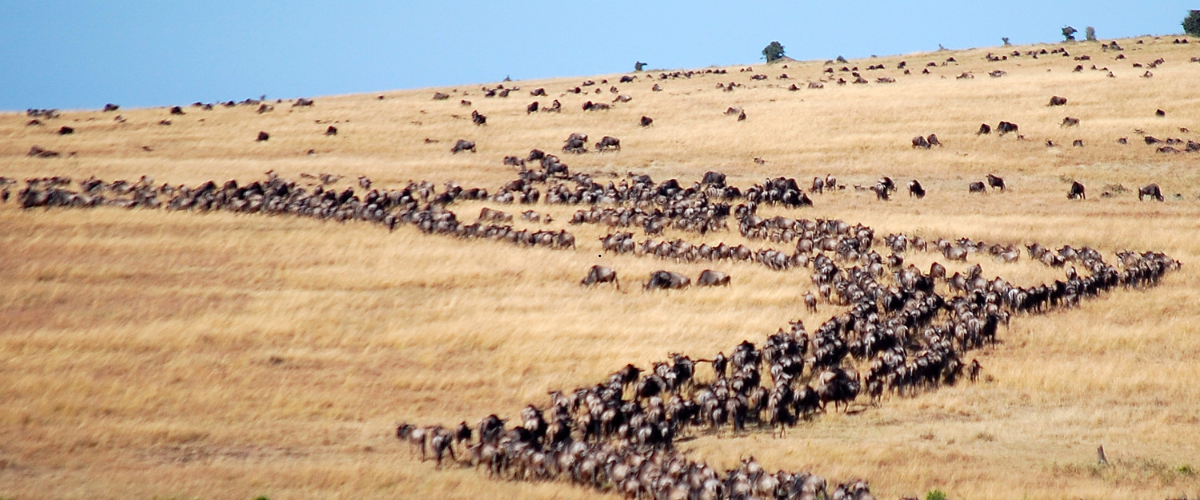
Picture the sky choked with golden dust kicked up by a seemingly infinite line of animals stretching all the way to the horizon, moving with a relentless, primal purpose. It is a staggering testament to the sheer will to survive, an unbroken cycle of life, death, and rebirth that has played out on the East African savannah for millennia.
Every single year, an astonishing 1.5 million wildebeest, accompanied by hundreds of thousands of zebras and gazelles, embark on a circular, deeply perilous journey across the vast expanse of the Serengeti ecosystem. They are in constant, desperate search of fresh grazing land and vital water sources, instinctively following ancient patterns driven by the rains.
A Symbiotic Lawn-Mower
To truly appreciate the Great Migration, one must attempt to wrap their mind around the sheer volume of biomass moving across the plains. This is not a scattered herd of a few thousand animals; this is the largest coordinated movement of terrestrial mammals on the planet.
The migration is primarily composed of roughly 1.5 million blue wildebeest (Connochaetes taurinus). While they are the undisputed stars of the show, they do not travel alone. Intermingled with the wildebeest are approximately 200,000 plains zebras and over 300,000 Thomson’s gazelles, along with smaller numbers of eland and impala.
Why do these different species travel together? It comes down to a fascinating evolutionary phenomenon known as a symbiotic feeding relationship. The zebras, with their strong, shearing teeth, are the pioneers of the grazing hierarchy. They happily consume the tall, tough, less nutritious upper stalks of the savannah grasses. By eating down this tall grass, they expose the shorter, greener, and far more nutritious middle layer of the grass, which is exactly what the wildebeest prefer. Finally, once the wildebeest have grazed the grass down to a stubble, the delicate Thomson’s gazelles move in to nibble on the freshest, newest shoots close to the ground. Together, they form a perfect, self-sustaining lawnmower that sweeps across the Serengeti.
The Hidden Engine: Rain and Ancient Volcanoes
What exactly possesses over two million animals to undertake a grueling 800-kilometer (500-mile) round trip every year, running a gauntlet of apex predators, treacherous rivers, and exhaustion?
The short answer is rain. The wildebeest are, essentially, chasing the weather. Their entire existence is predicated on following localized thunderstorms and the resulting flush of green grass. However, the long answer involves geology that dates back millions of years.
The southern plains of the Serengeti and the Ndutu region of the Ngorongoro Conservation Area sit in the shadow of ancient, towering volcanoes, including the massive Ngorongoro Crater and the still-active Ol Doinyo Lengai. Millions of years ago, eruptions from these volcanoes blanketed the southern plains in a thick layer of ash. Today, this soil is exceptionally rich in essential minerals, specifically calcium and phosphorus.
When the seasonal rains fall on these specific volcanic soils, the grass that sprouts is incredibly nutrient-dense. For pregnant and lactating wildebeest mothers, this grass is absolutely crucial. They literally cannot raise strong, healthy calves without the specific calcium and phosphorus found in the deep south of the Serengeti. This geological quirk is why, no matter how far north they roam, the herds are biologically compelled to return to the southern plains every single year to give birth.
The Comprehensive Month-by-Month Serengeti Migration Calendar
While the general clockwise route of the herds is highly predictable, the exact timing shifts slightly from year to year depending entirely on when the seasonal rains begin, peak, and end. To help you plan your itinerary, we’ve broken down the herds’ typical, month-by-month movements throughout the calendar year.
- January – March: Calving Season in the Deep South
- April – May: The Long Trek North Begins
- June – July: The Grumeti River Crossings
- August – October: The Perilous Mara River Crossings
- November – December: The Urgent Journey South
January, February, and March: The Miracle of Calving Season
As the new year begins, the immense herds are firmly established in the southern reaches of the Serengeti ecosystem, spilling over into the Ndutu region of the Ngorongoro Conservation Area. The short plains, fertilized by ancient volcanic ash, are lush and green.
This period is defined by one miraculous event: the calving season. Within an incredibly tight window of just two to three weeks—usually peaking in mid-February—roughly 500,000 wildebeest calves are born. That equates to an astonishing 8,000 births per day. The wildebeest have evolved this synchronized birthing strategy to overwhelm predators; there are simply too many calves for the lions, leopards, cheetahs, and hyenas to eat them all, ensuring the survival of the majority.
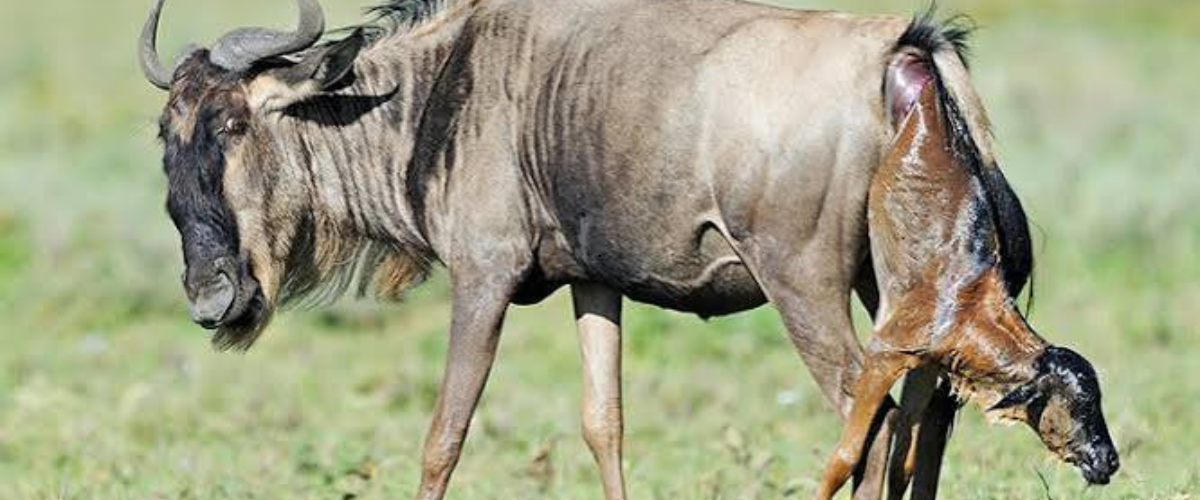
A wildebeest calf can stand within minutes of being born and can run with the herd in less than an hour, a vital adaptation for survival on plains teeming with hungry big cats. For travelers, this is arguably the best time of year for incredible predator-prey interaction and observing big cats in their prime.
April and May: The Long Trek and the Rut
By April, the southern plains begin to dry out, and the nutrient-dense short grasses are depleted. Instinct takes over, and the vast herds begin to mobilize, drifting north and west into the central Serengeti (the Seronera region).
This period coincides with the “long rains”—heavy, tropical downpours that turn the black cotton soil into thick, challenging mud. While travel can be slightly more difficult, the dramatic skies and vibrant green landscapes are a photographer’s dream. May is also the time of the “rut,” or mating season. The plains echo with the grunts and bellows of male wildebeest as they aggressively battle for temporary territories and the right to mate with passing females. It is a chaotic, noisy, and deeply fascinating time to be in the bush.
June and July: The Western Corridor and Grumeti Crossings
As the dry season tightens its grip in June, the massive columns of animals push further northwest into the Western Corridor of the Serengeti. Here, their progress is temporarily halted by the Grumeti River.
While the Grumeti crossings are not always as famous or visually dramatic as the later Mara River crossings, they are nonetheless spectacular. The river is often a series of deep pools and channels, heavily populated by some of the largest Nile crocodiles in Africa. The herds must negotiate these treacherous waters, offering travelers incredible, heart-stopping scenes of survival. By July, the survivors continue their march northward, heading toward the ultimate prize: the Maasai Mara.
August, September, and October: The Drama of the Mara River
This is the period that most people envision when they hear the words “Great Migration.” By August, the immense herds have arrived in the Northern Serengeti (the Kogatende region) and are staring down the sheer banks of the mighty Mara River.
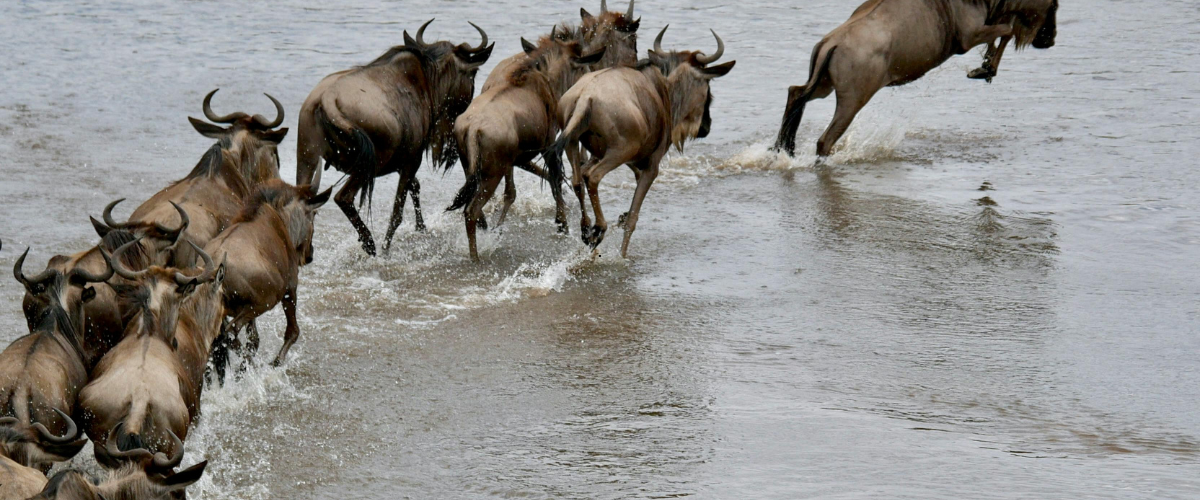
The river crossings are not a single, orderly event. Herds will gather on the banks for days, swelling in numbers, building a palpable, frantic tension. They will hesitate, move away, return, and pace nervously, deeply aware of the massive crocodiles waiting in the rushing currents below. Suddenly, often without warning, a single brave (or foolish) individual will leap into the water, and the panic ensues. Thousands of animals follow blindly, plunging down steep embankments, swimming frantically against the current, dodging snapping jaws, and struggling up the muddy banks on the opposite side.
It is dusty, loud, chaotic, and emotionally exhausting to watch, representing nature at its most raw and unforgiving. The herds will remain in the north, often crossing the river back and forth between Tanzania and Kenya multiple times in search of localized rain, until late October.
November and December: The Journey Back South
By late October or early November, the “short rains” typically begin to fall in the southern Serengeti. The wildebeest, possessing an uncanny ability to sense thunderstorms from over 30 miles away, immediately turn their backs on the north.
They begin a rapid, urgent journey southwards, primarily traveling down the eastern side of the Serengeti (the Namiri Plains area). This is a focused march; the herds are not meandering, they are moving with purpose, determined to reach the mineral-rich southern plains in time to fatten up before the next calving season begins, starting the great cycle all over again.
Two Distinct Angles: Choosing Your Migration Experience
When planning your safari, it is vital to understand that the migration offers two very distinct peak experiences. Which one you choose entirely depends on your personal preferences, your tolerance for crowds, and what kind of wildlife behavior you most want to witness.
| Safari Feature | The Calving Season (Jan – Mar) | The River Crossings (Aug – Oct) |
|---|---|---|
| Geographic Location | Southern Serengeti & Ndutu | Northern Serengeti (Kogatende) |
| The Visual Vibe | Vast, sprawling, relaxed herds spread across endless green plains. | High tension, chaotic, dusty, concentrated herds on riverbanks. |
| Primary Action | Births, babies taking first steps, intense big cat hunting. | Massive herds hesitating on banks, frantic swimming, crocodile attacks. |
| Ideal For | Big cat lovers, photography (green landscapes), travelers seeking fewer crowds. | Action-seekers wanting to see nature’s most famous and dramatic spectacle. |
The Predators of the Migration
You cannot talk about the Great Migration without talking about the predators that follow it. The sheer density of meat moving across the plains creates a bonanza for Africa’s large carnivores.
In the southern plains during calving season, the resident lion prides of the Serengeti are well-fed and highly active. Cheetahs, which rely on explosive speed, thrive in the short grass of the Ndutu plains, making it one of the best places on earth to witness a cheetah hunting a gazelle. Leopards ambush prey from the branches of the iconic acacia trees, while opportunistic spotted hyenas are ever-present, ready to steal a kill or take down vulnerable calves themselves.
How to Plan the Perfect Migration Safari
Witnessing the Great Migration requires careful planning and deep, localized knowledge. The wildebeest do not carry watches, and weather patterns are increasingly unpredictable.
- Book 9 to 12 Months in Advance: Availability is the biggest hurdle. The best camps in the prime migration areas (Ndutu in February, Kogatende in August) book up nearly a year in advance. If you have specific dates in mind, early booking is non-negotiable to secure prime real estate.
- Choose Your Ideal Season: Crossings vs. Calving. Decide if your priority is the high-stakes drama of the Mara River crossings (August-October) or the predator-heavy, baby-filled plains of the calving season (January-March). This dictates your entire itinerary.
- Consider Mobile Safari Camps: Stay with the herd. Unlike permanent lodges, “mobile camps” are luxury tented setups that physically move two or three times a year to stay as close to the migrating herds as possible, ensuring you spend less time driving and more time viewing.
- Trust Local Expertise: Work with specialized guides. Because the herds move based on rain, you need a safari operator with on-the-ground, daily intelligence. Expert guides can pivot daily plans to put you in the path of the action.
The Magic of Mobile Safari Camps
For the truly dedicated wildlife enthusiast, mobile tented camps offer the ultimate migration experience. Do not let the word “tent” fool you. These are deeply luxurious canvas suites featuring proper beds, hot bucket showers, flush toilets, and incredible food.
The primary advantage of a mobile camp is location. While a permanent lodge built of stone and wood is stuck in one place—meaning it might have incredible wildlife viewing for only three months of the year—a mobile camp tracks the migration. In February, they are pitched in the south. By August, they are packed up and re-pitched near the Mara River in the north. Waking up to the sound of wildebeest grunting just yards from your canvas walls is an incredibly immersive experience.
Responsible and Ethical Safari Practices
Witnessing the river crossings in particular is a profound privilege, but it must be done ethically. The intense pressure of thousands of animals trying to cross a river can be easily disrupted by human interference.
At Tanzania Wildlife Adventures, our guides adhere strictly to park regulations and ethical viewing standards. We do not block the animals’ path to the water, we keep a respectful distance to avoid causing panic, and we turn off our engines to let the natural sounds of the crossing dominate the experience. The welfare of the wildlife always supersedes a photograph, ensuring that this incredible phenomenon continues undisturbed for generations to come.
Experience the Greatest Wildlife Show on Earth
Predicting the exact location of millions of constantly moving animals requires an intimate, unparalleled understanding of the Serengeti’s rhythms. The wildebeest follow the rains, but who do you follow?
At Tanzania Wildlife Adventures, our expert, local guides possess decades of experience tracking the Great Migration. Whether your dream is to capture the chaotic plunge into the Mara River, witness the tender first steps of a wildebeest calf in Ndutu, or simply sit by a campfire under the vast African sky listening to the distant roars of a lion pride, we know exactly where to take you.
Do not leave a once-in-a-lifetime experience up to chance. Let us craft an itinerary that puts you in the center of the greatest wildlife show on Earth.