
Which River Crossing is Right for You?
The Serengeti ecosystem is vast, covering roughly 14,750 square kilometers. The herds do not cross a single river at a single time; rather, they face two major river-crossing phases as they navigate the landscape. Understanding the difference between the Western Corridor and the Northern Serengeti is crucial for planning your Great Migration safari in Tanzania and ensuring you are in the right place during the right months.
| Feature | Grumeti River | Mara River |
|---|---|---|
| Area | Western Serengeti | Northern Serengeti |
| Typical period | June–July | July–October |
| Experience | Earlier river-crossing phase | Famous northern crossing phase |
| Crowds | Can be quieter | Often busier in peak season |
| Guaranteed? | No | No |
| Best approach | Allow several nights in the relevant migration area | Allow several nights in Northern Serengeti |
Can we guarantee a river crossing?
No. The Great Migration is a natural wildlife movement influenced by rainfall, water levels, grazing conditions, and herd behavior. No safari operator, regardless of their experience, can guarantee the exact day, hour, or time of a river crossing. Spending several nights in the appropriate migration area with experienced guides can improve the opportunity to witness migration activity, but nature remains unpredictable.
The Epic Journey: What Drives the Herds?
To truly appreciate a river crossing, it is essential to understand why these animals undertake such a perilous journey. The Great Migration is not a singular event; it is a continuous, year-round loop driven entirely by the search for life-sustaining resources: rain and nutrient-rich grass.
Wildebeest are highly sensitive to the chemistry of the grass they eat, specifically seeking high levels of phosphorus and calcium, which are critical for lactation and bone growth, especially for young calves. When the seasonal rains end on the short-grass plains of the southern Serengeti, the soil dries out rapidly. Guided by the distant sound of thunder and the scent of rain, the herds begin their relentless march northward and westward, where permanent water sources and taller grasses offer salvation.
However, this salvation comes at a cost. The rivers that provide life-giving water also present the most terrifying obstacles. Wildebeest are not naturally aquatic animals, and crossing deep, fast-flowing water requires overcoming deep-seated instincts of fear. This hesitation, followed by eventual, overwhelming compulsion, is what creates the unbelievable tension of a river crossing.
The Two Great Crossings of the Serengeti
The Grumeti River Crossing (Western Serengeti)
As the herds leave the central Serengeti plains after the long rains, they push westward into a region known as the Western Corridor. Here, the Grumeti River marks the first major water obstacle of the Great Migration river crossing. Traditionally a strong period for migration activity in the Western Serengeti, the June and July months see herds gathering along the shaded, forested riverbanks.
The Grumeti River is different from the Mara. In many places, it consists of a series of disconnected pools rather than a continuously flowing river, though heavy rains can change this rapidly. What makes the Grumeti truly formidable are its inhabitants: the Grumeti River is home to some of the largest Nile crocodiles in Africa. These ancient predators lie in wait, perfectly camouflaged in the murky waters and mudbanks.
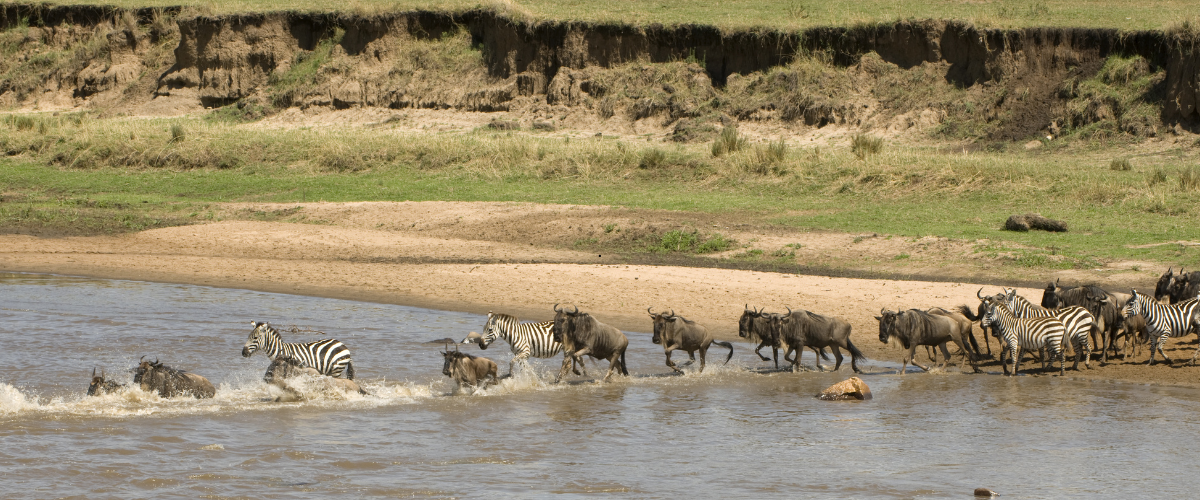
The Grumeti crossing is often characterized by a series of smaller, more fragmented crossings compared to the massive scale of the north. However, it offers a beautifully rugged, wild backdrop and is typically far less crowded with safari vehicles. For travelers seeking a more exclusive, serene viewing experience mixed with moments of intense action, the Grumeti phase is extraordinary.
The Mara River Crossing Tanzania (Northern Serengeti)
By July, the herds traditionally begin arriving in the Northern Serengeti, setting the stage for the dramatic Mara River crossing. This phase, extending roughly through October, is the most famous, heavily documented, and chaotic part of the Northern Serengeti migration. When you see documentaries of the Great Migration, you are almost always watching the Mara River.
The Mara River is a permanent, fast-flowing body of water characterized by incredibly steep, treacherous banks. The tension builds for days as massive herds gather on the edge. The noise is deafening—a constant chorus of grunts, brays, and the thud of hooves as hundreds of thousands of animals mill about, kicking up thick clouds of dust. Zebras, often traveling with the wildebeest, frequently take the lead, using their superior memory and intelligence to locate the safest crossing points.
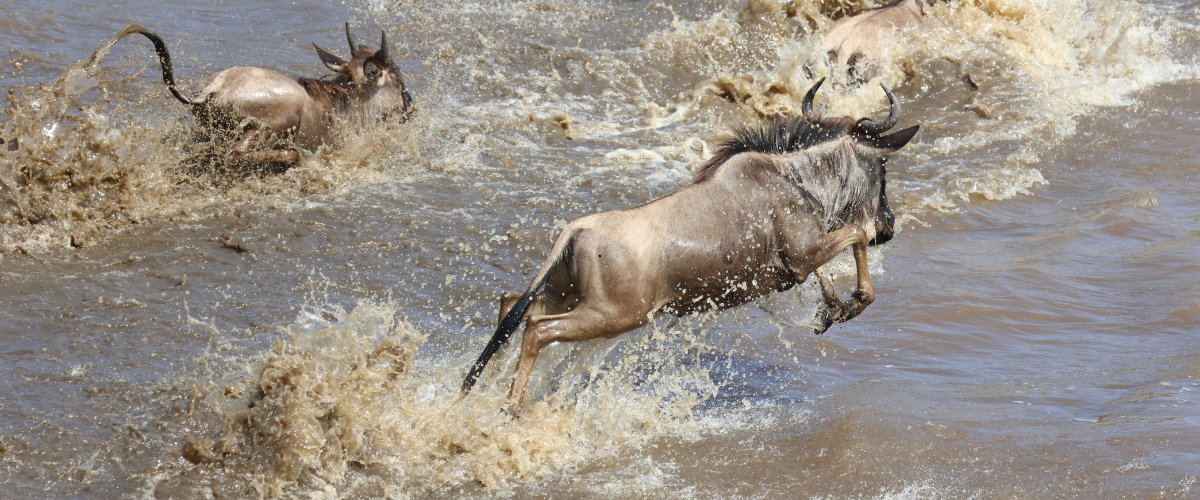
Eventually, the pressure from the herds behind, combined with growing thirst, forces a breakthrough. A single brave (or panicked) animal takes the plunge, triggering a spectacular, chaotic rush across the water. The air fills with splashing, desperate bleats, and the snapping jaws of crocodiles. It is a harsh, unfiltered display of natural selection. Our guides use local knowledge and years of experience to position guests for the best possible migration-viewing opportunities during this intense period, reading the herds’ body language to anticipate when the break will happen.
The Art of Patience: The “Waiting Game”
One of the most important things a safari traveler must pack is patience. A river crossing is not a scheduled performance; it is a spontaneous explosion of animal behavior. Understanding this will significantly enhance your safari experience.
Herds can exhibit what guides call “false starts.” Thousands of wildebeest may march purposefully toward the riverbank, line up as if ready to jump, and then, spooked by a snapping twig, a shifting crocodile, or simply an unseen scent, they will suddenly turn and run back into the plains. You may sit in your safari vehicle for six hours watching them gather, only for them to decide not to cross that day.
This waiting game is part of the magic. While you wait, you are immersed in the Serengeti ecosystem. You will watch social interactions among the herds, see vultures circling on thermal updrafts, and observe predators like lions and leopards resting in the shade nearby, waiting to ambush exhausted wildebeest that successfully make it across. The eventual crossing is the climax, but the build-up is just as much a part of the true safari experience.
Responsible Wildlife Viewing
Tanzania Wild Camps is deeply committed to sustainable and responsible tourism. The Mara River crossing attracts significant global attention, and the volume of vehicles can easily overwhelm the environment if not properly managed. We proudly support and strictly follow the comprehensive guidelines set by Tanzania National Parks (TANAPA) to protect the animals and the integrity of the ecosystem.
When you travel with us, our guides act as stewards of the park. They are trained to:
- Give wildlife space: We maintain a respectful, designated distance from the riverbanks to ensure we do not alter the natural behavior of the herds or cause unnecessary panic, which can lead to stampedes or animals turning back.
- Avoid obstruction: Vehicles are strategically positioned in designated viewing areas so they do not block the animals’ entry or exit points along the steep riverbanks. Blocking an exit path can result in animals drowning from exhaustion.
- Minimize noise and disturbance: We observe quietly. Loud talking, sudden movements, or radios can easily spook highly anxious animals standing on the precipice of a crossing. We allow the natural spectacle to unfold without human interference.
Where to Stay: Tanzania Wild Camps Accommodation
To witness a Serengeti river crossing, you need to be in the right place at the right time. Your basecamp dictates your access to the action. Tanzania Wild Camps offers strategically located accommodations to position you perfectly for the migration, allowing you to maximize your time in the field rather than driving long distances from outside the park.
Staying in our camps is a sensory experience. You will sleep under canvas, fall asleep to the distant roar of lions or the whooping of hyenas, and wake up to a fresh cup of Tanzanian coffee as the sun rises over the savanna.

-
- Serengeti Wildebeest Camp (Central/Mobile): Strategically positioned to follow the herds as they move through the central and western corridors. Ideal for guests traveling in the earlier stages of the migration, particularly around the June and July Grumeti phase. The camp offers comfortable beds, en-suite bathrooms, and hot showers in the heart of the bush.
View Camp Details
- Serengeti Wildebeest Camp (Central/Mobile): Strategically positioned to follow the herds as they move through the central and western corridors. Ideal for guests traveling in the earlier stages of the migration, particularly around the June and July Grumeti phase. The camp offers comfortable beds, en-suite bathrooms, and hot showers in the heart of the bush.
Featured Safari: 8-Day Great Migration River Crossing Itinerary
Don’t just read about the migration—experience it firsthand. Our tailored 8-Day Northern Serengeti Migration Safari is designed specifically around the July-October crossing season, maximizing your time in the north while ensuring you see the diverse landscapes of Tanzania’s famed Northern Circuit.
A Glimpse of Your Journey:
- Day 1: Arrival in Arusha. Touch down in Tanzania, where our team will transfer you to a comfortable lodge to rest and prepare for the adventure ahead.
- Day 2: Tarangire National Park. Begin your wildlife viewing in the “Land of Giants,” famous for its massive elephant herds and ancient baobab trees.
- Day 3: Central Serengeti. Enter the Serengeti ecosystem, driving through the central Seronera region, an area globally renowned for dense populations of big cats, including lions, leopards, and cheetahs.
- Days 4, 5 & 6: Northern Serengeti (The Mara River). The core of your safari. You will spend three full days exploring the remote northern plains. With packed lunches in your vehicle, you will have the flexibility to wait at the Mara River for crossing activity, observing the dramatic tension between the herds, the crocodiles, and the river currents.
- Day 7: Ngorongoro Crater. Descend into the world’s largest inactive volcanic caldera. This enclosed ecosystem boasts incredible wildlife density and offers one of the best chances to spot the endangered black rhinoceros.
- Day 8: Departure. Enjoy a final morning before flying or driving back to Arusha for your onward journey.
Safari Details:
- Duration: 8 Days / 7 Nights.
- Accommodation: Premium Tanzania Wild Camps lodges and luxury tented camps.
- Inclusions: Expert driver-guide, private open-roof 4×4 safari vehicle, all park entrance and concession fees, full-board accommodation, and drinking water.
- Best Time: July to October.
Great Migration River Crossings: Quick Overview
The Great Migration is a continuous wildlife movement through the Serengeti–Mara ecosystem, and river crossings are among its most dramatic moments. But they are natural events, not scheduled performances. No lodge, guide or safari company can guarantee the exact day or time of a crossing.
Grumeti River
As migrating herds move through the western Serengeti, the Grumeti area becomes an important part of the migration journey. Conditions and rainfall influence the movement, so travellers should think in seasonal windows rather than exact dates.
Mara River
Later in the migration cycle, herds may gather around the Mara River in the northern Serengeti. They can wait, turn back, move to another crossing point or cross suddenly. Patience is part of the experience.
How to Plan
A good migration safari should allow enough time in the appropriate region and should focus on the entire Serengeti experience—not only one crossing. Even without a river crossing, travellers can experience large herds, predators, landscapes and exceptional wildlife behaviour.
Responsible viewing matters. Guests and guides should respect park rules, keep appropriate distance and avoid blocking animals or other vehicles.
Ask our safari team about camps and itineraries positioned for the seasonal movement of the Great Migration → Enquire Now
Frequently Asked Questions
What is the best month to see the Great Migration river crossing?
August is traditionally a strong period for the famous Mara River crossings in the Northern Serengeti, while June and July are generally best for the Grumeti River in the west. However, the exact timing relies entirely on seasonal rainfall and fresh grass, making the movement somewhat unpredictable from year to year.
Can I see the Mara River crossing from Tanzania?
Yes, absolutely. While the Mara River crosses the border into Kenya’s Masai Mara National Reserve, a highly significant portion of the river—and some of the most spectacular, steep-banked crossing points—are located directly within Tanzania’s Northern Serengeti.
What is the difference between the Grumeti and Mara river crossings?
The Grumeti crossing happens earlier in the year (typically June-July) in the Western Serengeti and is generally quieter with smaller, more fragmented herd crossings. The Mara crossing (July-October) in the Northern Serengeti features massive, concentrated herds, steeper riverbanks, and is the more famous, dramatic, and chaotic spectacle.
Are Great Migration river crossings guaranteed?
No. The migration is dictated by unpredictable weather patterns and grazing conditions. No safari company or guide can guarantee a crossing will happen during your specific game drive. Safaris require a willingness to embrace the unpredictable nature of the wild.
How many nights should I spend in Northern Serengeti?
We highly recommend spending at least 3 to 4 nights
The Great Migration River Crossing: Your Complete Tanzania Safari Guide
Witnessing the Great Migration river crossing is one of the most thrilling wildlife experiences on Earth. As over 1.5 million wildebeest and 200,000 zebras move across the Serengeti ecosystem in search of fresh grazing, they must navigate treacherous waters patrolled by enormous crocodiles and fast-moving currents. It is a spectacle of survival, instinct, and raw nature.