
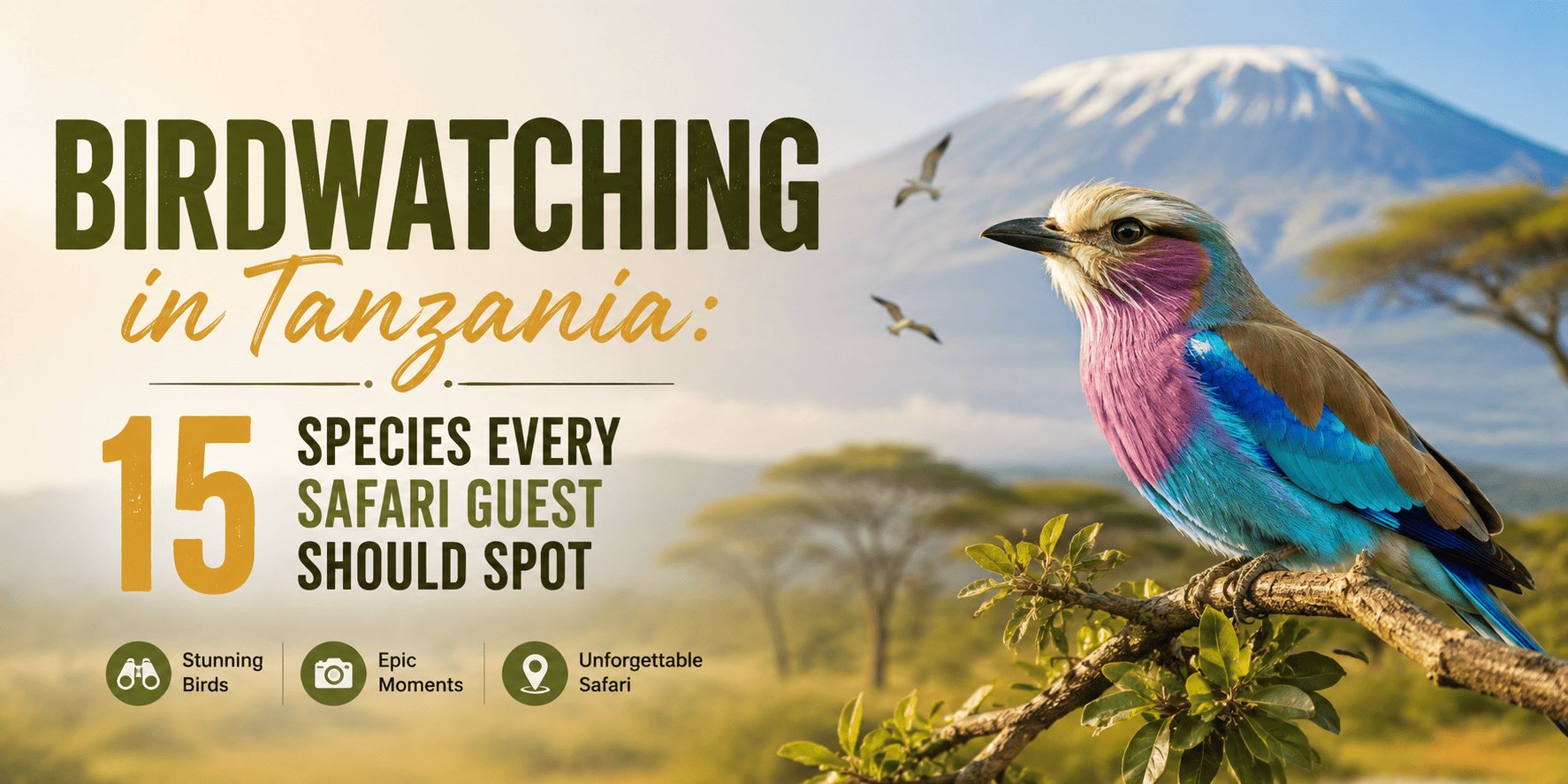
Birdwatching in Tanzania: 15 Species Every Safari Guest Should Spot
Birdwatching in Tanzania: 15 Species Every Safari Guest Should Spot
Tanzania is one of Africa’s most celebrated destinations for safari tourism and wildlife enthusiasts. While the Big Five and the Great Migration capture global attention, there’s another treasure waiting to be discovered: the incredible diversity of birds. Birdwatching in Tanzania is a rewarding experience for everyone, from seasoned ornithologists to first-time safari guests. With over 1,100 species—including striking endemics, dazzling migrants, and some of Africa’s most iconic birds—Tanzania is a genuine paradise for birders.
In this definitive guide, you’ll discover 15 must-see bird species for your Tanzanian safari, learn the best birdwatching tips, and get expert advice on the top birding hotspots. Whether your adventure is based at Tanzania Wildcamps, or you’re traversing the nation’s legendary national parks, let this blog be your companion for an unforgettable avian adventure.
Why Tanzania is a Birdwatching Haven
Tanzania’s vast landscapes—ranging from the endless Serengeti plains to lush forests and sparkling lakes—create habitats for some of the world’s most spectacular birds. The country’s location along major migratory routes means that, depending on the season, you may witness flocks of Eurasian and Palearctic migrants mingling with resident species. From wetlands and acacia woodlands to montane forests, every ecosystem is alive with birdlife.
Popular Keywords Integrated:
- Birdwatching Tanzania
- Must-see bird species
- Safari tourism
- Birdwatching tips
- Tanzania wildlife
- Best birdwatching locations
- Endemic birds of Tanzania
- Birdwatching tours
- Birdwatching safaris
- Tanzania national parks
- Popular birds for tourists
- Seasonal bird migrations
- Ornithology in Tanzania
- Birding hotspots
- Eco-tourism in Tanzania
15 Must-See Bird Species for Safari Guests
1. Grey Crowned Crane
A symbol of grace, the Grey Crowned Crane is easily recognized by its golden-feathered crest and stately gait. Its elaborate courtship dances are mesmerizing.
Where to spot: Lake Manyara, Ngorongoro Crater, Arusha National Park
Conservation status: Endangered
2. Lilac-breasted Roller
Perhaps Africa’s most photographed bird, the Lilac-breasted Roller boasts vibrant plumage and breathtaking aerial displays.
Where to spot: Serengeti, Tarangire, and open woodlands
3. African Fish Eagle
With its piercing cry and majestic appearance, the African Fish Eagle is Africa’s answer to the American Bald Eagle.
Where to spot: Around lakes and rivers—Lake Victoria, Lake Manyara, Selous Game Reserve
4. Secretary Bird
Stalking through the savanna on long legs, the Secretary Bird is a formidable predator, famous for hunting snakes.
Where to spot: Serengeti, Tarangire, Ruaha National Park
5. Superb Starling
The Superb Starling dazzles with iridescent blue-green feathers and a bright orange belly. Its sociable behavior makes it a favorite among tourists.
Where to spot: Throughout northern Tanzania, even around lodges and campsites
6. Fischer’s Lovebird
An endemic bird of Tanzania, the Fischer’s Lovebird is small, colorful, and found nowhere else.
Where to spot: Around Lake Victoria, Serengeti, and central Tanzania
7. African Jacana
With long toes that allow it to “walk on water,” the African Jacana is a wetland specialist.
Where to spot: Selous Game Reserve, Lake Manyara, Rufiji River Delta
8. Yellow-collared Lovebird
Another Tanzanian endemic, the Yellow-collared Lovebird is known for its bright green and yellow plumage.
Where to spot: Central Tanzania, especially Dodoma and Singida regions
9. Marabou Stork
The Marabou Stork is striking and unmistakable, with its bald head and massive bill—a master scavenger.
Where to spot: Serengeti, Ngorongoro, and many national parks during the migration
10. Silvery-cheeked Hornbill
With its large casque and loud, trumpeting call, the Silvery-cheeked Hornbill is a forest dweller.
Where to spot: Usambara and Udzungwa Mountains, forested reserves
11. African Pygmy Kingfisher
A tiny, vivid jewel, the African Pygmy Kingfisher brightens riverbanks and woodlands.
Where to spot: Selous, Ruaha, and riverine forests
12. Southern Ground Hornbill
Africa’s largest hornbill, the Southern Ground Hornbill is known for its deep booming call and striking red throat patch.
Where to spot: Serengeti, Tarangire, Ruaha
13. White-backed Vulture
Essential for ecosystem health, the White-backed Vulture is a key scavenger—especially during the Great Migration.
Where to spot: Serengeti, Ngorongoro, and main migration routes
14. Pink-backed Pelican
With graceful flocks circling over lakes, the Pink-backed Pelican is a delight for waterbird enthusiasts.
Where to spot: Lake Manyara, Lake Victoria, wetlands
15. Shoebill Stork
A true legend, the Shoebill Stork is hard to find, but unforgettable for those who succeed.
Where to spot: Remote wetlands in western Tanzania, particularly Moyowosi-Kigosi Game Reserve
Best Birdwatching Locations in Tanzania
- Serengeti National Park: Over 500 bird species, with spectacular sightings during the migration.
- Ngorongoro Conservation Area: Highland forests and lakes attract cranes, raptors, and rare endemics.
- Lake Manyara National Park: Famous for flamingos, pelicans, and an abundance of waterbirds.
- Tarangire National Park: Prolific birdlife, especially in the dry season; look for hornbills, bee-eaters, and more.
- Selous Game Reserve: Endless wetlands perfect for jacanas, kingfishers, and herons.
- Usambara and Udzungwa Mountains: Birding hotspots for endemic forest species.
- Ruaha National Park: Home to both northern and southern African species.
For more ideas on planning your safari, explore our travel tips and wildlife experiences.
Birdwatching Tips for Tanzania
- Bring Good Optics: Binoculars (8×42) and a camera with a zoom lens are essentials.
- Local Field Guide: A book or app on East African birds helps with swift identification.
- Birdwatching Tours: Join guided tours for access to secret hotspots and expert knowledge.
- Dress Smart: Neutral tones, a wide-brimmed hat, and sunscreen are key for comfort and camouflage.
- Respect Wildlife: Stay on paths, keep noise to a minimum, and avoid approaching nesting birds.
- Timing: Visit between October and April for migrants, and June to September for residents.
Seasonal Bird Migrations and Endemics
Tanzania’s location along the East African Rift Valley means it sees millions of migratory birds each year, especially between October and April. This influx adds to the spectacle of resident and endemic species, such as the Fischer’s and Yellow-collared Lovebirds—found nowhere else in the world.
Learn more about Tanzania’s birds via the African Bird Club.
Birdwatching Safaris and Eco-Tourism
Supporting eco-tourism is vital for the protection of Tanzania’s wildlife and habitats. Opt for responsible birdwatching safaris, support local guides, and choose camps (like Tanzania Wildcamps) that value conservation. Your birdwatching adventure helps fund local economies and protect these precious species for generations to come.
Top Birding Hotspots: Parks and Reserves at a Glance
Serengeti National Park
Famed for both the Great Migration and avian diversity. Look for ostriches, bustards, rollers, and secretary birds.
Ngorongoro Conservation Area
Flamingos on soda lakes, forest-dwelling turacos, and highland raptors await keen birders.
Lake Manyara National Park
A haven for flamingos, pelicans, spoonbills, and myriad waterbirds.
Tarangire National Park
Dry season congregations bring starlings, hornbills, and bee-eaters.
Selous Game Reserve
Africa’s largest game reserve—remote, wild, and teeming with jacanas, kingfishers, and storks.
Usambara and Udzungwa Mountains
Eastern Arc forests with an array of rare and endemic birds for the adventurous birder.
Ornithology in Tanzania: The Bigger Picture
Birdwatching in Tanzania is not just about ticking species off a list. Birds are crucial indicators of ecosystem health, and observing them can reveal much about environmental changes. By participating in birdwatching tours and safaris, you’re contributing to ongoing ornithological research and the future of Tanzania’s biodiversity.
Planning Your Birdwatching Safari
When to Go:
- October–April: Migratory birds in abundance
- June–September: Best for residents and clear weather
What to Pack:
- Binoculars and camera
- Field guide or app
- Light, neutral clothing
- Notebook for sightings
- Water bottle and snacks
How to Start:
- Research birding hotspots and parks
- Book your safari with a reputable provider like Tanzania Wildcamps
- Consider a private or group birdwatching safari with local guides
Give Back:
Combine your birdwatching adventure with eco-friendly lodging and support for community initiatives.
External Links
- African Bird Club – Tanzania
- BirdLife International – Tanzania
- eBird Tanzania Hotspots
- Tanzania National Parks
Conclusion
Birdwatching in Tanzania is a truly transformative experience. The nation’s varied habitats, wealth of species, and spectacular landscapes create memories that last a lifetime. Whether you’re relaxing at a Wildcamp lodge or exploring Tanzania’s legendary national parks, keep your binoculars handy—there’s always another must-see bird species just around the corner.
For more travel inspiration, birdwatching tips, and safari stories, follow our blog and connect with our team at Tanzania Wildcamps.